

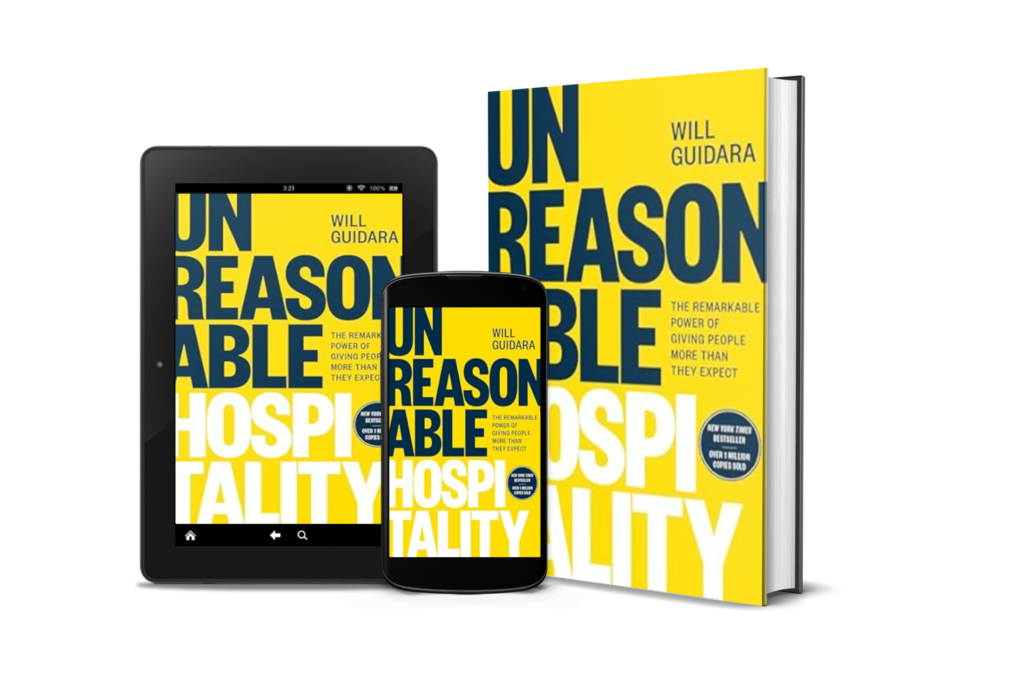
4.8 ⭐⭐⭐⭐⭐ out of 5 stars (5,469)
The “Unreasonable Hospitality” 10 Key Lessons, Summary, Main Idea, and Story
About the Author: Will Guidara, Key Takeaways, Video, Pros and Cons, and FAQs
👉 See why 5,469+ readers love this book
Disclaimer: “Transparency Note: We only recommend the books that genuinely help Business Leaders. Some external links are affiliate links, allowing us to earn a small, zero-cost commission for the effort we put into these reviews.”
Introduction
What separates a good business from a legendary one? It’s not the product; it’s the way the business makes people feel. Will Guidara, the force behind the globally acclaimed Eleven Madison Park, introduces the concept of Unreasonable Hospitality—a commitment to going far beyond expectations and making every interaction a memorable experience.
This book is a masterclass in building a culture of excellence and turning mundane service into an art form. Guidara argues that the secret to success lies in treating your team with as much care as you treat your guests, thereby empowering them to deliver the magic.
In this comprehensive Unreasonable Hospitality Summary, you will discover the following:
- The Core Principle: How to identify the gap between what is expected and what is unforgettable, and consistently deliver the latter.
- Team Culture: Strategies for empowering employees to make decisions and create “magical” moments. (For the foundational system to manage the business execution, read our review of Traction Book ).
- 10 Key Lessons: Actionable steps for elevating service in any industry, not just restaurants.
- Leadership and Vision: The leader’s role in setting the tone for unreasonable standards. (To instill the radical accountability required for high standards, check out Extreme Ownership Book ).
- Pros and Cons: An honest look at the commitment required to achieve unreasonable excellence.
- FAQs: Clear answers on how to apply these luxury principles to a small business budget.
If you’re ready to turn your customers into loyal fans and your business into a brand known for magic, start here.ve.
For Economic Context (Extended Analysis):
To understand the volatile economic background that shapes market and customer behavior, find a different, extended analysis of this highly related topic on our partner site:
The “Unreasonable Hospitality” 10 Key Lessons, summary, Main Idea
About the Author: Will Guidara, Key Takeaways, video, Pros and Cons, and FAQs
🎯 Main Idea and Summary: The Magic of Going the Extra Mile
Main Idea
The central idea of “Unreasonable Hospitality” is that transcendent success in any field is achieved not by perfecting your product alone, but by coupling it with an obsessive, generous, and unexpectedly personal level of service. Guidara argues that while “reasonable” hospitality meets expectations, “unreasonable” hospitality—giving people more than they expect, and often more than they even know they want—creates unforgettable loyalty and transforms a transaction into a relationship. This philosophy, he demonstrates, is applicable far beyond the walls of a restaurant.
Summary
Will Guidara, the former co-owner of the World’s Best Restaurant, Eleven Madison Park, delivers a masterclass in building a culture of excellence. The book reads like a behind-the-scenes documentary, chronicling the journey of a restaurant with mediocre reviews to the pinnacle of global acclaim. Guidara shares intimate stories, from serving a homeless man a hot dog to creating a custom New York City-themed lunch for a family that had missed their vacation. He meticulously details the systems, mindset shifts, and leadership principles that empowered his team to turn everyday interactions into lifelong memories, proving that the remarkable power of giving a damn is the ultimate business strategy.
Unreasonable Hospitality: He Got 3 Michelin Stars But LOST
Part 1: The Grind
“The year was 2006, and ‘The Gilded Plate’ was a restaurant admired by critics but adrift in its own ambition. Its owner, Arthur, was a culinary genius who believed a perfect score from a food reviewer was the ultimate prize. He spent his days in the kitchen, obsessing over the precision of a julienne cut and the exact temperature of a sous-vide steak. The dining room was a museum of fine food—beautiful, cold, and silent. Servers moved with the efficiency of soldiers, reciting scripted descriptions of the food. Customers were treated as transactions; they received a technically perfect meal, paid the bill, and left, never to return with any real enthusiasm. Arthur checked his metrics daily: covers served, average bill size, and critic ratings. He was winning on paper, but the soul of his restaurant was empty.”
Part 2: The Spark
“A few blocks away, a young manager named Elena was taking over a struggling bistro named ‘The Corner Table.’ It had mediocre reviews and was on the brink of failure. One rainy Tuesday, an elderly couple came in celebrating their 50th anniversary. They were soaked and shivering.
Instead of just seating them, Elena brought them two large mugs of hot tea she had brewed herself, ‘on the house, to warm you up.’ She noticed the wife struggling to read the menu and brought her a printed copy in a larger font. Later, overhearing them reminisce about their honeymoon in Paris, she sent out two glasses of Champagne with a note: ‘To 50 more years of adventure.’ The couple didn’t just enjoy their meal; they were moved to tears. They told everyone they knew, and their story became a local legend. Elena had a revelation: the food was the price of admission, but the feeling was what people truly bought.”
Part 3: The Choice
“Arthur at The Gilded Plate heard about The Corner Table’s growing buzz and dismissed it as ‘gimmicks.’ He doubled down on his product-centric approach, investing in even more expensive ingredients. Meanwhile, Elena empowered her entire team. She gave each server a small monthly budget with one instruction: ‘Find a way to turn one guest’s night from good to unforgettable.’ A server named Leo used his budget to buy a vintage comic book for a teenager who mentioned his collection. A host named Maria, learning a family had missed their vacation due to illness, created a ‘beach party’ at their table with a small bucket of sand, seashells, and a tropical drink. The Corner Table wasn’t just serving food; it was creating a community. They weren’t just busy; they were beloved.”
Part 4: The Legacy
“Five years later, The Gilded Plate finally earned its coveted third Michelin star. Arthur framed the letter, but that same week, he had to lay off staff due to declining reservations. The restaurant was a perfect, empty temple. The Corner Table, however, had been named the ‘Soul of the City’ by a major magazine and had a months-long waiting list. Elena had proven that ‘Unreasonable Hospitality’—giving people more than they expect—wasn’t an expense; it was the most powerful marketing and brand-building strategy in the world. Arthur had built a business that sold food. Elena had built an icon that sold joy, belonging, and memories.”
👨💻 About The Author: Will Guidara
Will Guidara is a renowned restaurateur and leadership speaker, celebrated for making the concept of elite hospitality accessible and actionable for all.
- Background: A second-generation restaurateur, Guidara co-owned Eleven Madison Park, transforming it from a struggling fine-dining spot to a legendary institution ranked #1 on the World’s 50 Best Restaurants list.
- Expertise: He is a leading voice on service, leadership, and company culture. His insights are born from direct, phenomenal success in one of the world’s most demanding industries.
- Media Presence: A sought-after speaker and commentator on business and hospitality, his ideas have influenced leaders across countless sectors.
- Goal: With “Unreasonable Hospitality,” Guidara aims to democratize the principles of world-class service, arguing that any business—from tech to finance—can use them to create raving fans.
🔑 10 Key Lessons from “Unreasonable Hospitality”
The 10 key lessons distill the philosophy and practices that made Eleven Madison Park iconic into enduring principles for any leader or team.
| Phase | Key Lesson | Action/Insight |
|---|---|---|
| The Mindset | 1. Hospitality is a Philosophy, Not a Department | It’s not just for restaurants. It’s a leadership mindset that should infuse every interaction with customers and colleagues. |
| 2. Be Unreasonable, Not Unrealistic | The goal isn’t to break the bank, but to break expectations. Find creative, personal, and often low-cost ways to overwhelm people with care. | |
| 3. The 95/5 Rule | While 95% of the experience should be consistent and excellent, it’s the magical, unexpected 5% that people remember and talk about forever. | |
| The Practice | 4. Listen for the “Ghosts” | Pay attention to the unstated needs and quiet comments. The magic is often in fulfilling a wish the guest didn’t even explicitly make. |
| 5. Empower the “Dot on the Line” | The employees closest to the customer (or “on the line”) must be empowered to make spontaneous decisions to create magical moments. | |
| 6. A “Good Job” is a Job Half-Done | Don’t just solve problems; use them as opportunities to create a fan. A complaint is a chance to over-deliver and win lifelong loyalty. | |
| The Culture | 7. Create a “Collective Consciousness” | Build a team culture where everyone is united by a shared purpose and set of values, creating a self-policing environment of excellence. |
| 8. Lead with Your Chin Up | A leader’s energy is contagious. Your optimism and belief, especially during challenges, set the tone for the entire organization. | |
| The Impact | 9. Turn Customers into Stakeholders | When people feel genuinely cared for, they stop being mere customers and become evangelists who have a personal stake in your success. |
| 10. The Ripple Effect is Real | One act of unreasonable hospitality doesn’t just affect one person; it creates a positive ripple that touches their network and your entire brand. |
Related: Unreasonable Hospitality Review: 10 Lessons & Full Summary
💡 Key Takeaways from the Book
- It’s About People, Not Products: The highest quality product is table stakes. The emotional connection you forge is what makes you irreplaceable.
- Empowerment is the Engine: You can’t script every magical moment. You must hire great people, fill them with your purpose, and give them the trust and autonomy to act.
- Hospitality is an Inside Job: To treat your customers exceptionally well, you must first treat your team exceptionally well. A cared-for team naturally cares for guests.
- The Power of the “Second Yes”: The first “yes” is to a customer’s request. The “second yes” is to the unspoken wish behind it—this is where the magic lives.
✅ Pros and ❌ Cons of “Unreasonable Hospitality”
| Feature | ✅ Pros (Advantages) | ❌ Cons (Disadvantages) |
|---|---|---|
| Narrative | Inspiring & Practical: Filled with captivating, real-world stories that immediately illustrate each principle in action. | Restaurant-Centric: Some examples are hyper-specific to fine dining, requiring the reader to translate them to their own context. |
| Actionability | Immediately Applicable: The lessons are concrete and can be implemented by any team, in any industry, at any level. | Can Feel Intense: The standard of “unreasonable” excellence might feel daunting or unsustainable for some readers or organizations. |
| Relevance | Universal Principles: The core ideas of empathy, empowerment, and going the extra mile are critical for any customer-facing or people-driven business. | Not a Rigid System: Those looking for a strict, step-by-step “how-to” guide may find the book more philosophical than prescriptive. |
| Impact | Culture-Transforming: This book has the power to fundamentally shift a team’s mindset and collective approach to service and each other. | Requires Buy-In: The principles only work if leadership and the entire team fully embrace them; it’s not a solo endeavor. |
💡 5 Root Causes of Their Success (And Their Universal Lessons)
| Problem They Solved | What They Did at EMP | Key Lesson/Modern Parallel |
|---|---|---|
| P1: The Transactional Mindset | They moved beyond simply serving food to creating emotional, narrative-driven experiences for each guest. | Business is Human. In a world of automation, the companies that win are the ones that create genuine human connection. Modern parallel: Apple’s Genius Bar, Zappos’ customer service. |
| P2: Disempowered Frontlines | They gave every employee, from servers to bussers, a budget and the permission to create magical moments without asking for approval. | Empowerment Drives Innovation. The people closest to the problem are best equipped to solve it. Let them. This is a core tenet of agile and modern management. |
| P3: Inconsistent Standards | They built a “Collective Consciousness” through constant communication and shared values, ensuring everyone was aligned on the “why.” | Culture is Your Operating System. A strong, clear culture ensures consistency and quality better than a thousand-page rulebook ever could. |
| P4: Ignoring Soft Data | They became masters of “listening to the ghosts”—paying attention to body language, offhand comments, and unstated desires. | The Gold is in the Subtext. Big data tells you what people did; empathy and observation tell you why they did it and what they truly want next. |
| P5: Leadership Disconnection | Guidara led from the front, with visible passion and optimism, setting the energetic tone for the entire house every single day. | Energy is Contagious. A leader’s primary job is to be the chief energy officer. Your team will mirror your attitude, for better or worse. |
👉 From Post to Purpose: Make the Next Breakthrough Your Reality. Purchase Your Book.
❓ Frequently Asked Questions (FAQs)
Is this book only for people in the restaurant or hospitality business?
Absolutely not. While the stories are from a restaurant, the principles are universal. The book is aimed at anyone who leads a team, serves customers, or wants to build a more passionate and effective organization—from tech startups and retail stores to law firms and non-profits.
What’s the difference between customer service and “unreasonable hospitality”?
Customer service is functional and reactive (solving a problem, answering a question). Hospitality is emotional and proactive. It’s about the feeling you impart. Service is about the “what,” while hospitality is about the “how” and the “why.”
What is a simple example of “unreasonable hospitality” I could start with?
The iconic example from the book is the “dreamweaving” meeting, where the team would brainstorm guest experiences based on notes from reservations. A simple start is to task your team with identifying one small, unexpected, and personal way to delight a customer this week. It could be a handwritten thank-you note, a relevant article you send them, or a small, thoughtful gift based on a previous conversation.
How did they afford to do all these extravagant things?
Guidara is quick to point out that many of the most memorable acts of hospitality were low or no-cost. The power isn’t in the expense; it’s in the thoughtfulness and personalization. The key is empowerment and creativity, not an unlimited budget.
People Also Ask
What is the book “Unreasonable Hospitality” about?
“Unreasonable Hospitality” by Will Guidara is a leadership and business book that details the philosophy and practices that helped transform Eleven Madison Park into the #1 restaurant in the world. It argues that the key to extraordinary success in any industry is to go beyond mere customer service and practice “unreasonable hospitality”—the art of giving people more than they expect through personalized, empathetic, and generous acts that create emotional connections and turn customers into lifelong advocates.
Who is the author of Unreasonable Hospitality?
The author of Unreasonable Hospitality is Will Guidara. He is a renowned restaurateur who was the co-owner of Make It Nice, a hospitality group that included Eleven Madison Park, The NoMad, and Made Nice. Under his leadership, Eleven Madison Park was ranked #1 on the World’s 50 Best Restaurants list in 2017. He is now a sought-after speaker and advisor on leadership and company culture.
Final Verdict
‘Unreasonable Hospitality’ is not just a business book; it is a manifesto for a more human-centric way of working. Guidara’s infectious storytelling and profound insights make a compelling case that the path to greatness is paved with generosity and empathy. In an era of automation and transactional relationships, its lessons on empowerment, culture, and connection are a vital antidote.
Buy if you want to inspire your team, create raving fans for your brand, and rediscover the joy and purpose in your work.
Rating: 4.8/5 stars— An inspiring, practical, and transformative read that will change how you lead and serve.
Tags:
Unreasonable Hospitality
Will Guidara
Eleven Madison Park
Business Leadership
Company Culture
Customer Service Excellence
Restaurant Management
Team Empowerment
Leadership Books
Customer Experience