
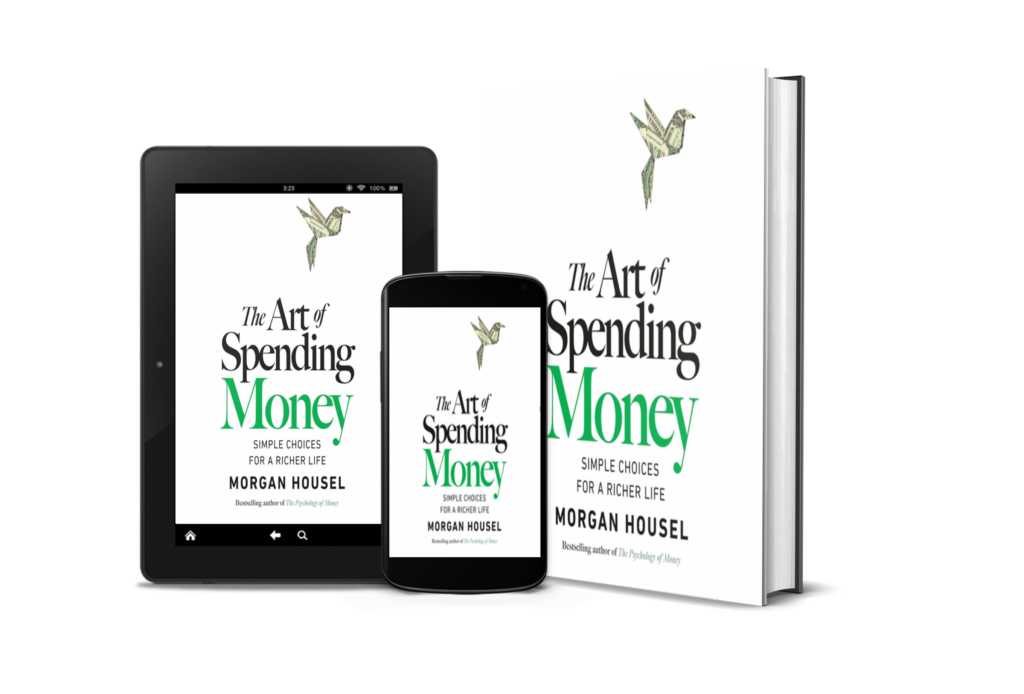
The “Art of Spending Money” 10 Key Lessons, Summary, Main Idea, and Story
About the Author: Morgan Housel, Key Takeaways, Video, Pros and Cons, and FAQs
4.8 ⭐⭐⭐⭐⭐ out of 5 stars (2,345)
👉 Order your copy from Amazon today
Disclaimer: “We are sharing the Best Business Books with you! Note that we might earn a small commission if you use our links, but your success in Leadership is our only goal. The price is not affected.”
Introduction
We spend a lifetime learning how to earn money, but how much time do we spend mastering the skill of spending it well? The Art of Spending Money challenges the traditional, restrictive approach to personal finance and argues that true wealth comes from intentionally designing a life you love.
This book is about shifting your mindset from scarcity to abundance. It teaches you how to allocate your money towards experiences and values that bring deep satisfaction, rather than mindlessly accumulating material possessions. The goal is to spend intelligently, save powerfully, and live guilt-free.
In this comprehensive The Art of Spending Money Summary, you will discover the following:
- The Core Principle: How to identify your “Core Values” and align your spending to maximize happiness.
- Psychology of Purchase: Understanding why we buy and how to eliminate buyer’s remorse. (For the foundational principles of money behavior, read our review of The Psychology of Money Book ).
- 10 Key Lessons: Strategies for intentional saving, investing, and giving.
- The Guilt-Free Method: How to cut costs ruthlessly on things you don’t care about, so you can spend extravagantly on things you do.
- Automation and Systems: The importance of setting up your finances to support your spending goals. (To set up your automated financial system, check out I Will Teach You to Be Rich Book ).
- Pros and Cons: An honest review of this “spending-first” philosophy.
- FAQs: Clear answers on balancing spending and saving for retirement.
If you’re ready to treat money as a tool for a fulfilling life, not an end in itself, start mastering the art of the intentional spend.is, you’ll look at your next purchase—whether it’s a coffee or a car—with a completely different perspective.
For Mastering Experiences (Extended Analysis):
If you are spending money on experiences or hospitality, find a different, extended analysis of this highly related book on our partner site:
The “The Art of Spending Money” 10 Key Lessons, summary, and Main Idea
About the Author: Will Guidara, Key Takeaways, video, Pros and Cons, and FAQs
🎯 Main Idea and Summary: The Psychology of a Rich Life
Main Idea
The central idea of “The Art of Spending Money” is that true financial wealth isn’t measured by the size of your bank account, but by the degree of control you have over your time and your ability to spend money in ways that generate genuine, lasting happiness for you. Housel argues that we obsess over earning and investing, but mastering the spending part—the “why” behind our purchases—is the most underrated and impactful financial skill. A richer life comes from spending on freedom, relationships, and peace of mind, not just on material goods.
Summary
Morgan Housel, the bestselling author of “The Psychology of Money,” delivers another profound yet simple masterpiece. The book is a collection of powerful stories and mental models that dissect our irrational, emotional relationship with spending. Housel explains why a billionaire might feel poor while a teacher feels rich, and why the best money you can spend is often on things that don’t depreciate, like memories and removing stressors. He meticulously dismantles the myth that more stuff equals more happiness and provides a practical framework for using money as a tool to build the life you actually want, not the life you’re supposed to want.
The Art of Spending Money: A Tale of Two Cousins
Inspired by Morgan Housel’s “The Art of Spending Money: Simple Choices for a Richer Life”
When their beloved grandfather passed away, cousins Maya and Liam each received an unexpected inheritance of $50,000. What happened next revealed a profound truth about wealth that most people never understand.
The Optimizer vs. The Reflector
Maya, a project manager by profession, saw the money as a tool for optimization. She spent weeks creating complex spreadsheets, analyzing stock charts, and devouring blogs about alpha and beta. She felt a surge of power and control. “This is my ticket to getting rich,” she told her friends confidently. She invested every dollar in a portfolio of trendy tech stocks, chasing the highest possible return.
But the money was out of sight, and the anxiety was not. She checked her portfolio dozens of times a day, her mood swinging wildly with the market. The inheritance that was supposed to bring security had become a source of constant, low-grade stress.
Liam, a high-school teacher, felt completely overwhelmed. He didn’t understand the stock market and was terrified of losing what his grandfather had worked so hard to save. Instead of acting immediately, he did something that seemed strange to everyone around him: he did nothing.
He left the money in a simple savings account and spent his time reflecting. He thought deeply about what his grandfather had truly valued: security, family, and the freedom to enjoy a quiet afternoon without worry. Through this reflection, Liam realized something profound. For him, “a richer life” didn’t mean a bigger number in a brokerage account. It meant less worry and more time. It meant freedom from the anxiety that was now consuming Maya.
One Year Later: Success on Paper, Struggle in Reality
A year later, Maya’s portfolio was up 15%. By all external measures, she was winning. Her friends congratulated her on her investment savvy. But Maya felt trapped. She was working the same stressful job, now feeling even more pressure because she had “real money” to manage. She was richer on paper, but her life felt exactly the same. Nothing had actually changed in her day-to-day experience of living.
Liam, after a year of careful reflection, finally made his moves. He used $15,000 to pay off his remaining student loans. The feeling of lifting that monthly burden was, as he described it, “like getting a 10% raise in happiness.” Every month, he no longer had to see that payment leave his account. He was free.
He spent $5,000 on a new, efficient furnace for his aging home. This wasn’t a sexy investment, but it eliminated the constant worry of a breakdown in the middle of winter. No more anxious nights wondering if the heat would fail when temperatures dropped below freezing.
Then, he took $2,000 and booked a cabin for a week for his entire extended family. He was recreating a childhood vacation they all cherished. The laughter around the dinner table, the stories shared by the fire, the connection with people he loved—this was wealth you couldn’t measure on any balance sheet.
The remaining $28,000 stayed in savings. It wasn’t invested. It wasn’t optimized. It just sat there, a bulwark against the unexpected that let him sleep soundly every night.
The Market Correction: When Reality Hits
One day, a market correction wiped out Maya’s gains and then some. The stress she had been carrying for months boiled over into panic. Unable to bear the anxiety anymore, she sold her holdings at a loss, locking in the failure she had feared all along. The money had cost her sleep, peace of mind, and ultimately, a portion of the principal. She had spent an entire year as a slave to the market, and the emotional toll was far greater than any financial loss.
Liam, hearing about the market crash from colleagues at work, felt a pang of sympathy for investors but was otherwise completely unaffected. His “portfolio” was performing perfectly, though you’d never see it on any stock ticker. He was free from student debt. His home was warm and secure. The memory of laughter with his family in the woods was priceless. His net worth was lower than Maya’s had been at its peak, but his “life worth” was immeasurably higher.
The Art of Spending: What Money Can and Cannot Buy
Liam had mastered something that eludes most people: the art of spending. Not the art of saving. Not the art of investing. The art of converting money into genuine life improvement.
Morgan Housel, in his brilliant book “The Art of Spending Money,” teaches us that wealth isn’t about how much you have. It’s about what you do with what you have. It’s about understanding what money can and cannot buy.
Money can buy freedom from debt. Money can buy security and safety. Money can buy time with people you love. Money can buy peace of mind through preparedness. But money cannot buy peace of mind if you’re constantly worried about losing it. Money cannot buy happiness if you’re chasing returns instead of living. Money cannot buy fulfillment if you don’t know what you truly value.
Maya chose complexity and optimization. Liam chose simplicity and intention. One strategy led to anxiety and eventual loss. The other led to peace and genuine wealth.
The Question You Need to Ask
Every day, you make choices about money. Save or spend. Invest or enjoy. Optimize or simplify. But here’s the question most people never ask: what are you really optimizing for?
Are you measuring wealth by your net worth? Or by the quality of your sleep, the depth of your relationships, the freedom in your schedule? Are you rich on paper or rich in life?
Liam didn’t beat the market. He didn’t maximize his returns. But he invested in what actually made his life richer—and that compounded in ways no stock portfolio ever could.
The art of spending money isn’t about being reckless or irresponsible. It’s about being intentional. It’s about knowing what brings genuine value to your life and having the courage to spend money on those things, even when the world tells you to optimize and accumulate instead.
Your money is a tool. The question is: what are you building with it?
The video adds depth and emotion that will transform how you think about wealth forever.
Watch the Complete Story Video
Want to experience this powerful story in a whole new way? I’ve created a complete video that brings Maya and Liam’s journey to life with visuals, music, and storytelling that will help you truly understand the art of spending money wisely.
📺 Watch the full video on YouTube – Click the link below to watch now and see how this lesson unfolds visually.
👨💻 About The Author: Morgan Housel
Morgan Housel is a partner at The Collaborative Fund and a former columnist for The Wall Street Journal and The Motley Fool, renowned for making the complex psychology of money accessible and unforgettable.
- Background: A multiple-award-winning financial writer, best known for his international bestseller “The Psychology of Money,” which has sold millions of copies worldwide.
- Expertise: He specializes in behavioral finance and the history of economics, focusing on the stories we tell ourselves about money and how they drive our decisions.
- Media Presence: A widely respected voice in the finance world, his work is known for its timeless wisdom and narrative depth, making him a favorite among both investors and everyday readers.
- Goal: With “The Art of Spending Money,” Housel aims to shift the conversation from cold, hard math to warm, human psychology, empowering readers to use money as a tool for a better life.
Related: I Will Teach You to Be Rich
🔑 10 Key Lessons from “The Art of Spending Money”
The 10 key lessons distill the book’s philosophy into actionable principles for anyone who wants to get more happiness and freedom out of every dollar.
| Phase | Key Lesson | Action/Insight |
|---|---|---|
| The Mindset | 1. Wealth is What You Don’t See | The real measure of wealth is income not spent today, which gives you options and control tomorrow. The hidden savings matter more than the visible displays. |
| 2. Spend on Freedom, Not Just Stuff | The ultimate luxury is controlling your time. The best purchases are often those that buy you freedom from a commute, a boss, or a stressor. | |
| 3. The Goal is Independence, Not Riches | Aim for a state where you can wake up and say, “I can do whatever I want today.” This is a more achievable and fulfilling goal than being a billionaire. | |
| The Practice | 4. Know Your “Enough” | The hardest financial skill is getting the goalpost to stop moving. Define what “enough” means for you, or you’ll forever be chasing an illusion. |
| 5. Spend on Others and on Experiences | Money spent on others (charity, gifts) and on shared experiences (trips, dinners) yields a much higher “happiness return” than money spent on solitary material goods. | |
| 6. The Price of a Thing is Only the First Cost | Calculate the total cost: money, time, stress, maintenance, and envy. The true cost of a fancy car isn’t just the loan payment, but the constant worry about door dings. | |
| The Psychology | 7. Avoid Lifestyle Inflation | As your income rises, resist the urge to proportionally increase your spending. The gap between your income and spending is where your financial power lies. |
| 8. You Are Not Your Possessions | Your self-worth is separate from your net worth. Basing your identity on your possessions is a fragile foundation that crumbles in a downturn. | |
| The Impact | 9. The Best ROI is Peace of Mind | Sometimes, the highest return is not financial. Paying off a debt, buying better insurance, or hiring a helper can yield immense returns in reduced anxiety. |
| 10. Tailor Your Spending to Your Personality | Your spending plan must be personal. What brings one person joy may bring another stress. Don’t copy someone else’s version of a rich life. |
Related: The “The Art of Spending Money” 10 Key Lessons, summary, and Main Idea
About the Author: Will Guidara, Key Takeaways, video, Pros and Cons, and FAQs
💡 Key Takeaways from the Book
- Control Over Time is the Highest Dividend: Money’s greatest intrinsic value is its ability to give you control over your most finite asset: your time.
- Happiness is a Subjective ROI: The return on investment that matters most is your personal happiness, not the one listed on a brokerage statement.
- The Enemy is “More”: An insatiable appetite for more is the root of most financial misery. Defining “enough” is the first step toward true wealth.
- Stories Drive Spending: We don’t spend money on things; we spend it on the stories we tell ourselves about what those things represent (status, security, freedom).
✅ Pros and ❌ Cons of “The Art of Spending Money”
| Feature | ✅ Pros (Advantages) | ❌ Cons (Disadvantages) |
|---|---|---|
| Narrative | Profoundly Simple & Relatable: Uses powerful, everyday stories to make complex psychological concepts instantly understandable and memorable. | No Technical Advice: Those looking for specific budgeting templates, investment hacks, or tax strategies will be disappointed. This is a philosophy book. |
| Actionability | Mindset-Shifting: The lessons are immediately applicable to your next financial decision, changing your “spending gut-check” forever. | Requires Self-Honesty: The book forces you to confront your own money demons, which can be uncomfortable for some readers. |
| Relevance | Universally Applicable: The principles apply to everyone, from a college student to a retiree, regardless of income or net worth. | May Seem “Soft”: Readers who prefer hard numbers and mathematical certainty may dismiss the psychological focus as “fluffy.” |
| Impact | Life-Changing Perspective: Has the power to permanently reduce financial anxiety and increase life satisfaction by redefining what “wealth” means. | Simplicity Can Be Misleading: The ideas are simple to grasp but incredibly difficult to master and implement consistently over a lifetime. |
💡 5 Root Causes of Financial Stress (And Their Antidotes)
| Problem | The Common Trap | Housel’s Lesson / The Antidote |
|---|---|---|
| P1: The Moving Goalpost | You get a raise and immediately feel you need a bigger house and a nicer car, keeping you on the same stressful treadmill. | Define “Enough.” The goal is not to have the most, but to have enough to be happy and free. Stop the goalpost from moving. |
| P2: Social Comparison | You spend money on things you don’t need to impress people you don’t like, driven by the fear of falling behind your peers. | Wealth is Hidden. Real wealth is the options your savings give you, not the status symbols you display. Focus on your own values, not others’ possessions. |
| P3: Misallocating Spending | You spend heavily on depreciating assets (cars, gadgets) that provide fleeting joy, while under-investing in experiences and freedom. | Spend for Happiness ROI. Reallocate your spending towards things proven to increase long-term happiness: experiences, generosity, and buying time. |
| P4: Tying Ego to Net Worth | Your self-worth rises and falls with your portfolio balance or the brands you own, creating a fragile and anxious identity. | Separate Self from Stuff. You are not your money. Build an identity around your character, relationships, and skills, not your possessions. |
| P5: Ignoring the Total Cost | You see the sticker price but not the cost in time, energy, and stress that a purchase will incur over its lifetime. | Calculate the Full Cost. Before a major purchase, account for all costs—financial, emotional, and temporal. The true cost is often hidden. |
👉 From Post to Purpose: Make the Next Breakthrough Your Reality. Purchase Your Book.
❓ Frequently Asked Questions (FAQs)
Is this book just a rehash of “The Psychology of Money”?
While it lives in the same intellectual universe, this book has a much sharper focus. “The Psychology of Money” covers a broad range of financial behaviors. “The Art of Spending Money” drills down deeply into one specific, and often overlooked, part of the equation: the output. It’s a dedicated masterclass on the spending side of the balance sheet.
What is the single most important lesson from the book?
The most important lesson is that the highest dividend money pays is the ability to control your time. Every spending decision should be evaluated through this lens: “Is this purchase moving me toward more control over my daily life, or is it trapping me?”
How do I practically apply this? Can you give an example?
Yes. Let’s say you get a $5,000 bonus.
- Old Mindset: “I can put a down payment on a newer luxury car.”
- Housel’s Mindset: “I could put this $5,000 toward paying off my credit card debt, which would free up $150 a month in minimum payments, reducing my financial stress. Or, I could use it to pay for a cleaning service for a year, buying back 4 hours of my weekend every week.” The latter options often provide more lasting happiness and freedom.
Who is this book for?
It’s for anyone who has ever felt that making more money didn’t make them as happy as they thought it would. It’s for the overworked professional, the stressed parent, the recent graduate, and the retiree wondering if they saved “enough.” It’s less about the math of money and more about the meaning we assign to it.
People Also Ask
What is “The Art of Spending Money” about?
“The Art of Spending Money” by Morgan Housel is a behavioral finance book that argues true financial success comes from mastering the psychology of spending, not just earning and investing. It teaches that a richer life is achieved by spending money in ways that maximize personal happiness, freedom, and control over one’s time, rather than on conspicuous consumption and social validation.
Is Morgan Housel a financial advisor?
No, Morgan Housel is not a financial advisor. He is a partner at The Collaborative Fund and an award-winning financial writer. His expertise lies in the psychology, history, and storytelling of money, not in providing personalized financial advice. His work is focused on broad principles and mental models that readers can apply to their own unique situations.
Final Verdict
‘The Art of Spending Money’ is not just a finance book; it is a philosophical guide to a better life. Housel’s genius lies in his ability to reveal profound truths through simple stories, permanently altering how you view your bank account and your calendar. In a world obsessed with getting richer, this book is a vital reminder to focus on living richer.
Buy if you want to reduce financial anxiety, break the cycle of comparison, and start using your money as a tool to build a life filled with more joy and freedom.
Rating: 4.8/5 stars— A short, brilliant, and life-changing book that belongs on every nightstand.
Tags:
The Art of Spending Money
Morgan Housel
Behavioral Finance
Personal Finance
Financial Psychology
Happiness
Wealth Building
Lifestyle Design
The Psychology of Money Author
How to Spend Money Wisely