
Disclaimer: Our site may earn a small commission on products purchased through our links. Your price remains unchanged—this guarantees our honest recommendations.
4.8 ⭐⭐⭐⭐⭐ out of 5 stars (519)
👉 Stop Missing Out: Become the Next Success Story—Order Your Book!
The “HR Approved 52 Ways” 10 Key Lessons, Summary, Main Idea, and Story, About the Author: “Upgraded Books”, Key Takeaways, Video, Pros and Cons, and FAQs
Introduction:
That “HR Approved” Book Everyone’s Talking About
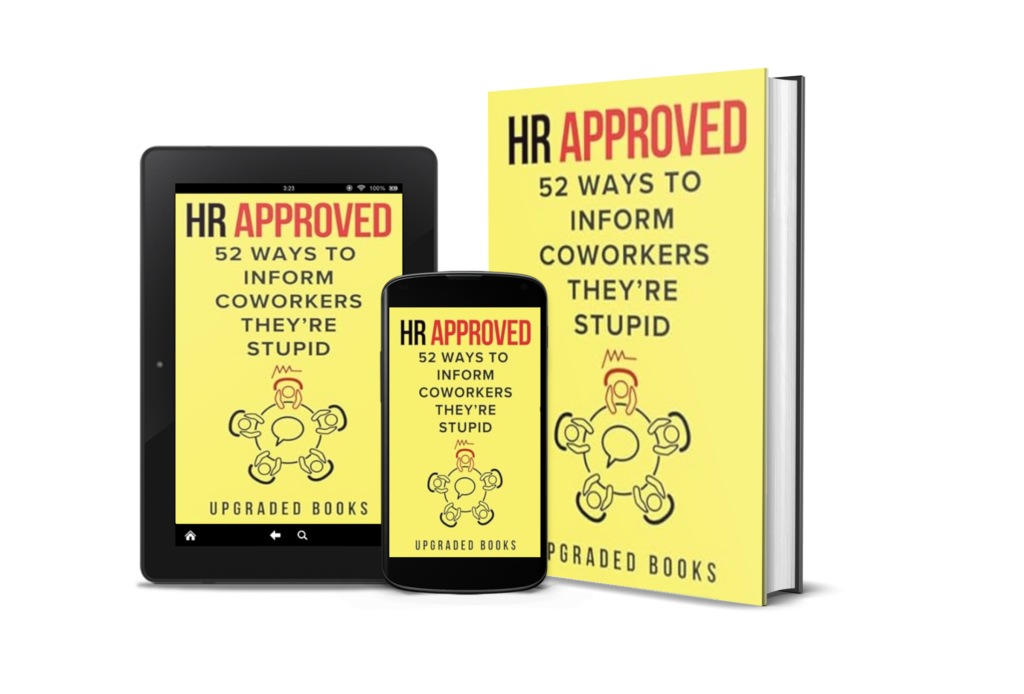
Okay, let’s be real—we’ve all worked with someone who made us wonder how they tie their own shoes before leaving the house. HR Approved 52 Ways To Inform Coworkers They’re Stupid arrives with a provocative promise: “safe,” passive-aggressive comebacks for your most frustrating colleagues, all cleverly disguised in corporate jargon. But beneath its satirical cover lies a serious question for modern professionals: Is this just a hilarious gag gift, or does it accidentally reveal the unspoken handbook for surviving a dysfunctional office?
This book, sitting at a 4.2-star rating from over 500 reviewers, walks a razor-thin line between cathartic humor and dangerous advice. It’s a mirror held up to the absurdities of office politics, reflecting the silent screams we all stifle during pointless meetings. Let’s dig beyond the laughs and unpack what this book really says about our work culture—and when reaching for it means you’ve already lost.
Here’s our no-holds-barred breakdown:
The Main Idea: The central premise isn’t about actually calling coworkers stupid. It’s a satirical exploration of the coded language and passive-aggression that flourishes in workplaces where direct, honest communication feels too risky. It highlights the vast gulf between what we think and what HR policies allow us to say, offering “approved” phrases that are technically polite but dripping with subtext.
A Detailed Summary: We’ll catalog what’s inside this unofficial survival guide. Expect 52 entries of corporate doublespeak—phrases like “Let’s circle back to the basics” or “I’m intrigued by your unique approach to the data” that subtly convey disbelief or frustration. Each entry is a masterclass in saying one thing while meaning another, exposing the intricate dance of office politics where perception often trumps truth.
The Real Story: This book thrives because it taps into a universal workplace truth: When psychological safety is low, passive-aggression becomes the default language. It’s a symptom of environments where addressing issues head-on is discouraged, leaving sarcasm and subtle digs as the only outlets. (For the powerful antidote to this dynamic—a framework for having honest, high-stakes conversations with respect and results—the science-based techniques in Never Split the Difference provide the real tools this satire mocks).
Lessons for Today – The Practical Side:
- Decoding the Subtext: Learn to hear the real meaning behind common corporate phrases, making you more politically savvy.
- Professional Composure: Understanding how to vent frustration in harmless, private ways (like reading this book) to maintain your calm in public.
- The Boundary Line: Recognizing the crucial difference between using humor to cope and using it as a weapon that erodes team trust.
Key Takeaways for Office Survival:
- Humor as a Pressure Valve: Used correctly, satire can relieve stress. Used as a blueprint for communication, it destroys relationships.
- Silence as a Signal: A culture that needs a book like this is often a culture where people don’t feel safe to speak openly.
- Your Escape Plan: If you find yourself mentally rehearsing these phrases daily, it’s not a communication problem—it’s a cultural one. The real solution may be to fix the team or find a new one.
The Good & The Bad – No Filters:
- The Good: It’s brilliant, laugh-out-loud satire that accurately skewers corporate absurdity. It provides instant catharsis and a sense of solidarity to anyone who’s endured a terrible meeting.
- The Bad: Its greatest risk is being taken literally by someone lacking nuance. The “approved” phrases are landmines that can irreparably damage professional relationships if deployed with genuine malice. (For timeless, constructive principles on building genuine influence and goodwill, the foundational lessons in How to Win Friends & Influence People remain the essential counterpoint to this book’s cynical wit).
5 Communication Traps This Book Exposes:
- The Indirectness Trap: Where simple feedback must be wrapped in seven layers of softening language, obscuring the actual message.
- The Sarcasm Shield: Using humor as a socially acceptable way to express hostility, creating a toxic undercurrent.
- The Bureaucratic Bludgeon: Weaponizing corporate policy and jargon to shut down conversation rather than engage in it.
- The False Positivity Trap: Coating criticism in exaggerated praise (“I’m so impressed by your confidence in that completely wrong answer”) that feels more insulting than directness.
- The Meeting-as-Theater Trap: Where dialogue is performance art for managers, not a genuine exchange of ideas to drive decisions.
Straight Answers to Questions You’re Whispering:vator.
Related: Built to Last: Successful Habits of Visionary Companies
Main Idea and Summary
The Main Idea
The central idea is that frustration with incompetent colleagues is universal, but expressing it directly is career suicide. This book bridges that gap by offering a catalog of witty, indirect, and professionally safe comebacks and strategies. It transforms raw irritation into polished, passive-aggressive diplomacy, providing both a humorous outlet and a practical communication toolkit.
Summary
“HR Approved 52 Ways To Inform Coworkers They’re Stupid” is a satirical yet practical guide from the HR Approved Office Survival Series. It presents 52 scenarios—from the meeting monopolizer to the credit-stealer—and provides scripted, clever responses that sound cooperative on the surface but carry a subtle, corrective subtext. It’s part joke book, part coping mechanism, and part genuine guide to navigating difficult workplace personalities without setting your professional reputation on fire.
The “Reply All” Catastrophe: When Your Coworker’s Stupidity Threatens to Drown Your Entire Department (and How I Almost Snapped)
The notification icon on my screen glowed red, an angry beacon. It was 9:17 AM, and the “Reply All” chain from hell had begun. Sarah from Accounts, bless her cotton socks, had accidentally sent a minor query about printer toner to the entire global company distribution list. Not just once, but twice. And then, the predictable domino effect: someone “reply-all’d” asking to be removed, which, of course, triggered more reply-alls from people asking them to be removed.
My inbox became a digital tsunami of incompetence. I watched, horrified, as my unread email count soared into the hundreds. My blood pressure, I’m fairly certain, followed suit. Every fiber of my being screamed, “SARAH, FOR THE LOVE OF ALL THAT IS HOLY, LEARN HOW TO USE EMAIL!”
In that moment, I vividly imagined walking over to Sarah’s desk, holding up a copy of “Email Etiquette for Dummies,” and tapping it meaningfully. Or perhaps a more subtle approach: designing a flowchart titled “Is ‘Reply All’ REALLY Necessary?” and subtly pinning it above her monitor. But then, the cold, hard reality of “HR Approved” policies slammed into me. I couldn’t actually do any of that without a stern talking-to, sensitivity training, or perhaps even a formal reprimand. My career, like my inbox, would drown.
This wasn’t an isolated incident. Just last week, it was Kevin, insisting that “clearing his cache” meant physically wiping down his computer screen. Or Brenda, who still printed out every single email, highlighted the important bits, and then scanned them back into a PDF. My department, it seemed, was a breeding ground for beautifully incompetent, well-meaning individuals who, despite all evidence, continued to baffle me.
That’s when I discovered HR Approved 52 Ways To Inform Coworkers They’re Stupid. It wasn’t a manual for actual confrontation, thank goodness. Instead, it was a hilarious, cathartic guide to navigating these daily absurdities without losing your job or your mind. It taught me the art of the “casually dropped training manual,” the “confused-but-patient facial expression,” and the subtle power of a strategically placed IT department poster.
When Sarah finally walked over, eyes wide, “I think I broke the email,” I didn’t snap. I didn’t even roll my eyes (outwardly). I simply smiled, nodded, and, with the wisdom of 52 HR-approved ways dancing in my head, calmly suggested, “Let’s walk through how to send an email to a specific group, shall we? It’s a common trick.” Because sometimes, the most effective way to inform someone they’re misinformed is with a smile, a solution, and a copy of a very particular book hidden in your desk.
About the Creator: Upgraded Books
“Upgraded Books” is a publisher/authorship brand that has carved out a unique niche, creating satirical, humorous, and relatable content for the modern professional. They specialize in identifying specific, shared workplace frustrations and packaging them into digestible, funny, and often surprisingly useful guides. Their success with titles like this one shows a deep understanding of office culture’s darkly comic undercurrent and the market for products that speak to the “water cooler truth” everyone knows but rarely articulates in polite company.
🔑 The 10 Key Features (The Book’s “Lessons”)
| # | Key Feature / “Lesson” | Description & Why It Works |
|---|---|---|
| 1 | The Cathartic Title | The title alone is a release valve. It names the quiet part out loud, creating instant camaraderie with anyone who’s ever struggled with a difficult colleague. |
| 2 | Scenario-Based Structure | Each “way” addresses a specific, common colleague archetype (The Know-It-All, The Missing Deadline, The Idea Thief). This makes the advice feel immediately relevant and applicable. |
| 3 | Scripted, “Safe” Language | It provides the exact words to use. This removes the emotional labor of crafting a diplomatic response in the heat of frustration and reduces the risk of saying something regrettable. |
| 4 | Blend of Humor & Utility | While hilarious to read, the phrases are often genuinely useful templates for professional communication. It teaches reframing criticism as collaborative questions. |
| 5 | Passive-Aggressive Mastery | It schools the reader in the fine art of corporate passive-aggression—sending a message without leaving a verbal paper trail that could get you in trouble with HR. |
| 6 | Emotional Regulation Tool | Reading the book allows you to laugh and vent vicariously. Having a prepared “script” in mind can lower your stress in real-time during infuriating interactions. |
| 7 | Fast, Digestible Format | With 52 concise entries, it’s easy to pick up, flip to a relevant section, and get a quick dose of humor or advice without committing to a long read. |
| 8 | Encourages Strategic Thinking | It shifts your mindset from reactive frustration to strategic communication. You start thinking, “How can I navigate this person?” instead of just “I can’t stand this person.” |
| 9 | Perfect Gift for Work Friends | It’s the ultimate inside-joke gift for a trusted coworker, signaling a shared understanding of the office’s unique challenges. |
| 10 | A Reminder You’re Not Alone | The very existence of the book validates your experiences. It’s proof that difficult colleagues are a widespread occupational hazard, not just your bad luck. |
💡 The 5 Pillars of This Book’s Appeal
| Pillar | What It Is | Real-World Application & Reason for Success |
|---|---|---|
| P1: Vicarious Catharsis | Providing the satisfaction of thinking the “forbidden thought” through safe, humorous expression. | Stress Relief: It lets readers engage with their frustration in a consequence-free zone, reducing the emotional burden they carry at work. |
| P2: Practical Armor | Offering real phrases and tactics that can be deployed in actual workplace conflicts. | Utility Disguised as Comedy: The value isn’t just in the laugh; it’s in having a clever, pre-vetted retort ready when needed. |
| P3: Shared Identity | Creating a community of readers who “get it” and share the same war stories. | “It’s Not Just Me”: The book’s premise builds an instant connection with anyone who has ever been exasperated by a coworker. |
| P4: Satirical Education | Using humor to subtly teach lessons about office politics, communication, and emotional intelligence. | Learning Through Laughter: Readers absorb lessons about diplomacy and boundary-setting more easily when they’re entertained. |
| P5: Boundary-Setting Blueprint | Modeling how to assert yourself and correct behavior without being overtly confrontational. | Professional Empowerment: It gives permission and language to address poor behavior indirectly, which can improve team dynamics. |
📌 Key Takeaways from the Concept
- Humor is a Shield: Using wit and sarcasm strategically can defuse tension and allow you to address issues you might otherwise avoid.
- Indirect Communication is a Core Professional Skill: Success often depends on delivering difficult messages in palatable, politically safe ways. This book is a crash course.
- Preparation Reduces Anxiety: Having a mental (or literal) script for difficult conversations takes the panic out of the moment and leads to better outcomes.
- Acknowledging Frustration is Healthy: Pretending everything is fine is draining. This book provides a healthy middle ground between suppression and explosion.
- The Best Office Humor is Rooted in Truth: The book is funny because it’s accurate. Its longevity comes from reflecting a real, persistent aspect of work life.
✅ Pros and ❌ Cons
| Potential for Misuse. It could encourage passive-aggression over direct, healthy communication if used without discretion. | ✅ Pros (Advantages) | ❌ Cons (Considerations) |
|---|---|---|
| Concept & Tone | Hilariously Relatable & Cathartic. Perfectly captures a universal workplace sentiment. | Risk of Misinterpretation. The sarcastic tone could be taken literally by some, or seem overly negative. |
| Practicality | Offers Actionable Scripts. Provides real phrases that can be adapted for difficult conversations. | Not a Deep Guide. It’s a tactical tool, not a substitute for serious conflict resolution or communication training. |
| Gift Value | Exceptional Niche Gift. The perfect, laugh-out-loud present for a specific work friend or team. | Very Specific Audience. Not for everyone. Gifting it to someone overly serious or to a direct report could backfire. |
| Format & Length | Quick, Easy Read. Accessible format perfect for short attention spans or reading in small bursts. | May Feel Repetitive. The “52 ways” structure can lead to some similar-feeling entries. |
| Overall Impact | Boosts Morale & Camaraderie. Can improve a team’s dynamic by providing shared comic relief about common pains. | Potential for Misuse. Could encourage passive-aggression over direct, healthy communication if used without discretion. |
❓ Frequently Asked Questions (FAQs)
1. Is this book actually approved by HR?
No. The title is satirical. No corporate HR department would officially approve telling a coworker they’re stupid. The “approval” is a joke, implying the phrases are cleverly disguised enough to sound professional and avoid an HR violation.
2. Could using these phrases actually get me in trouble?
It depends entirely on delivery and context. The book provides a template, but your tone, body language, and workplace culture determine the outcome. Use discretion. Some phrases are genuinely clever ways to reframe a question; others are pure sarcasm best used with friends, not in serious meetings.
3. Is this book mean-spirited?
Its essence is satirical and cathartic, not malicious. It’s aimed at venting frustration humorously to prevent mean-spirited outbursts. The goal is to laugh at the absurdity of certain workplace behaviors, not to bully individuals.
4. Who is the ideal reader for this book?
Someone with a well-developed sense of irony who works in an office environment has experienced frustrating colleagues and appreciates dark humor as a coping mechanism. It’s best for those who can separate the joke from real-world application.
5. Are the suggestions actually useful, or just jokes?
A mix of both. Many suggestions are witty reframes that could be useful (e.g., turning “That’s wrong” into “Can you help me understand the data path that led you to that conclusion?”). Others are clearly just for a laugh.
6. Is this part of a series?
Yes, it’s part of the “HR Approved Office Survival Series” by Upgraded Books, which includes other titles like “HR Approved 37 Ways To Celebrate a Coworker’s Last Day” and “HR Approved 40 Excuses To Leave Work Early,” following the same satirical format.
👉 “Do you want this idea to not just remain a ‘post’ but to become your ‘reality’? Start the journey here.”
Final Verdict
“HR Approved 52 Ways To Inform Coworkers They’re Stupid” is a 4.2-star concept that delivers exactly what it promises: a much-needed laugh and a sly toolkit for the politically fraught office environment. It succeeds not as a serious communication manual, but as a piece of shared cultural commentary and a pressure release valve for daily frustrations.
Buy it if: You have a dark sense of humor, work in a traditional office, need a cathartic gift for a like-minded coworker, or enjoy satirical takes on corporate life.
Skip it if: You are easily offended, prefer confrontation, work in a highly sensitive or toxic environment, or are looking for a sincere, academic guide to conflict resolution.
Rating: 4.2/5 Stars — A sharply funny, niche product that provides therapeutic laughter and surprisingly pragmatic phrasing for anyone who’s ever had to diplomatically deal with a difficult colleague.
TheDailyStoic #RyanHoliday #Stoicism #MentalResilience #Mindset #SelfMastery