
Disclaimer: Our site may earn a small commission on products purchased through our links. Your price remains unchanged—this guarantees our honest recommendations.
4.4 ⭐⭐⭐⭐⭐ out of 5 stars (7,680)
👉 The Bestseller You Need: Grab Your Copy and Discover the Secret.
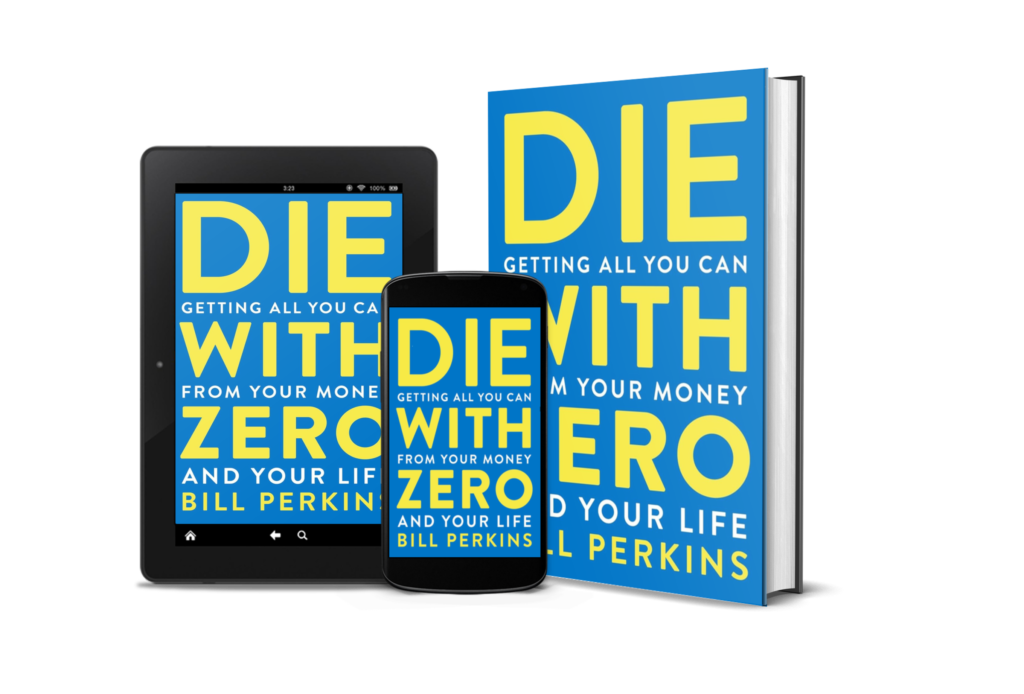
The “Die With Zero” 10 Key Lessons, Summary, Main Idea, and Story, About the Author: Bill Perkins, Key Takeaways, Video, Pros and Cons, and FAQs
Introduction:
What If Saving Everything Is the Wrong Goal?
What if the ultimate financial taboo isn’t spending too much, but spending too little? Bill Perkins’ Die With Zero (with 7,600+ ratings at a compelling 4.4 stars) launches a direct assault on conventional financial wisdom. It forces a radical, uncomfortable question: What if dying with a large fortune isn’t a sign of success, but evidence of a life poorly optimized—a story of wasted time and missed experiences?
We’re culturally programmed for accumulation. The goal is to save, to build a nest egg, to “be secure.” But Perkins, a hedge fund manager, argues with mathematical and philosophical rigor that this mindset commits a grave error: it confuses the means (money) with the end (a fulfilling life). Money is a tool to buy experiences, create memories, and fund your aspirations. Hoarding that tool until you die is like a carpenter saving their finest hammer for a project that never comes.
This isn’t a call for reckless hedonism. It’s a framework for life energy accounting. It asks you to measure your wealth not in dollars, but in the sum of memorable, meaningful experiences you can have while you’re young and healthy enough to truly enjoy them. Let’s have the radical conversation your future self will thank you for.
Your guide to optimizing your life, not just your portfolio:
The Main Idea: The core philosophy of Die With Zero is to maximize your lifetime fulfillment, not your net worth. Your goal should be to spend your financial capital in such a way that, ideally, your last check bounces to the funeral home. It champions intentional spending on life experiences at the optimal time, rather than deferring all enjoyment to a vague, potentially less-able future.
A Detailed Summary: Perkins builds a provocative framework around key concepts:
- Life Energy: Your time and health are your most valuable, non-renewable resources. Money is simply stored life energy (hours worked).
- Experience Capital: The memories, skills, relationships, and personal growth gained from experiences. This is the true wealth you take with you.
- The Spending Smile: A graph modeling ideal net worth over a lifetime. It should rise during peak earning years and then deliberately decline in retirement as you spend on experiences, aiming for zero at life’s end.
- Time-Bucketing: Dividing your life into phases (e.g., 20s-30s, 40s-50s, 60s+) and proactively planning the peak experiences for each, recognizing that your health and interests change.
The Real Story: This book exposes the hidden cost of the pervasive “deferred-life plan”—the idea that you grind now to live later. The tragic risk is that “later” may bring diminished health, lost loved ones, or faded passions. It argues that balancing experiences across your entire lifespan is a smarter, more joyful strategy. (For a powerful and contrasting view that emphasizes extreme frugality and long-term compounding to achieve financial independence, J.L. Collins’ The Simple Path to Wealth offers a foundational, security-first perspective that creates a vital dialectic with Perkins’ approach).
Lessons for Today – Life Energy Accounting:
How to apply this mindset shift practically:
- Calculate Your “Enough”: Define the specific nest egg needed for a secure, comfortable old age (covering healthcare, basics, etc.). Everything beyond that is fuel for experiences.
- Front-Load Memorable Experiences: Invest in adventures, travel, and learning with your children when they’re young and with your partner when you’re both healthy, rather than waiting for a traditional retirement.
- Give with a Warm Hand: Donate money to loved ones or causes you care about while you’re alive to see the impact and joy it creates, rather than as a posthumous directive in a will.
Key Takeaways for Smart Living:
- Health is a Non-Renewable Asset: A €10,000 trek in the Himalayas at 35 is a fundamentally different experience than at 75. Factor health into your timing.
- Your Memory is the Ultimate ROI: The dividend paid by a great experience is the memory, which you can “reconsume” for free for the rest of your life.
- Avoid the Regret of Under-Spending: Just as you fear outliving your money, you should fear leaving unforgettable life chapters unlived.
The Good & The Bad – Important Warning:
- The Good: It provides a crucially important and often-ignored perspective shift. It jolts readers out of autopilot accumulation and into intentional life design. The focus on health, time, and memory is profound.
- The Bad: It is a philosophy that requires extreme personalization and caution. Taken literally by someone with modest means or poor discipline, it could justify irresponsible spending and jeopardize basic security. It underestimates the psychological comfort a financial buffer provides. (For a balanced, systematic approach that blends responsible wealth-building with conscious spending, Ramit Sethi’s I Will Teach You to Be Rich provides an excellent, structured counterweight for applying these ideas sensibly).
5 Principles of Experience-First Living:
- Maximize Fulfillment, Not Wealth: Use money as a tool to buy life experiences, not as a scorecard.
- Time is Your Scarcest Resource: Allocate it with even more care than your money.
- Invest in Experiences Early: The returns (in memory and personal growth) compound over a longer lifetime.
- Balance Your Life Account: Ensure you’re making deposits of fun, connection, and growth every year, not just in the final chapter.
- Leave a Legacy of Experiences: The stories and memories you create with and for others are more valuable than a cash inheritance.
Straight Answers About Money and Life:
Related: New Side Hustle
Main Idea and Summary
The Main Idea
The central, provocative idea is that the purpose of accumulating money is to fund life experiences, and the optimal financial strategy is to time those experiences to maximize “net fulfillment” over your lifetime, aiming to reach death with zero financial surplus. Money left unspent represents wasted life energy. The book introduces concepts like your “personal interest rate” (the value of an experience now vs. later) and advocates for “time-bucketing” experiences into your peak health years.
Summary
“Die With Zero” is part financial guide, part philosophical manifesto. Perkins uses clear logic, personal anecdotes, and simple calculations to argue against the mindless hoarding of wealth. The book is structured around key principles: optimizing your life’s “memory dividend,” investing in experiences early when your “health capital” is high, giving money to your children when they’re young (when it has maximum impact), and understanding the rapidly diminishing returns of working more once your experience fund is full. It’s a call to be intentional about spending your most finite resource: time.
About the Author: Bill Perkins
Bill Perkins is a fascinating figure to deliver this message. He is a successful energy trader and hedge fund manager, as well as a renowned high-stakes poker player and film producer. This background gives him unique credibility—he’s not a minimalist preaching austerity; he’s a wealth creator analyzing wealth’s purpose. Having built and deployed significant capital, he writes from a place of having tested these principles in the high-risk arenas of both finance and life. His perspective is that of a strategic optimizer, asking: “If we have the numbers to prove traditional retirement saving is often suboptimal, why do we still follow it blindly?”
🔑 The 10 Key Lessons from “Die With Zero”
| # | Key Lesson | The Core Principle & Application |
|---|---|---|
| 1 | Maximize Your Life Experiences, Not Your Wealth | Principle: Wealth is a means to an end. Define the end (experiences, freedom, family) first. Application: Create a “Life Checklist” of experiences, then work backwards to fund it. |
| 2 | Your Most Valuable Asset is Your “Health Capital” | Principle: Your ability to enjoy experiences declines with age. A ski trip at 30 is worth more than at 70. Application: Front-load physically demanding or adventurous experiences into your younger, healthier decades. |
| 3 | Money’s Value Has a “Personal Interest Rate” | Principle: $10,000 for a transformative trip at age 25 may be worth $50,000 to your 40-year-old self in memories. Application: Spend on impactful experiences earlier, even if it means saving less temporarily. The memory dividend pays compound interest. |
| 4 | Time-Bucket Your Life | Principle: Divide your life into phases (20s, 30s, 40s, etc.) and assign peak experiences to each based on health, freedom, and family status. Application: Plan your major adventures, career breaks, and family time strategically across decades, not randomly. |
| 5 | Give Money to Your Kids When They’re Young | Principle: $10,000 can change a 25-year-old’s life (down payment, startup capital). The same amount is trivial to a 65-year-old who’s already set. Application: Consider giving inheritance early (“intergenerational transfers”) when it has maximum leverage on their life experience. |
| 6 | Calculate Your “Enough” Number | Principle: There’s a number that, once invested, will grow to fund your later years without further contributions. Working beyond this point is inefficient. Application: Project your future modest living costs, calculate the lump sum needed to get there, and consider retiring from full-time work once you hit it. |
| 7 | Buy Memories, Not Things | Principle: Experiences appreciate in your memory; physical objects depreciate and are forgotten. Application: When faced with a spending choice, ask: “Will this purchase create a lasting memory or story, or will it just become clutter?” |
| 8 | Don’t Let Fear of the Unknown Paralyze You | Principle: The fear of running out of money is often irrational and leads to dying with a huge surplus and a life of regret. Application: Use conservative but realistic projections for lifespan and market returns. Plan for a good life, not just a long, cautious one. |
| 9 | Earn, Save, Then Spend | Principle: The final, often skipped step is crucial. The cycle isn’t complete until you convert money into life value. Application: Build targeted savings buckets for specific experiences (e.g., “Patagonia Trek Fund”) and spend them guilt-free when the time comes. |
| 10 | Your Net Worth is a Means, Not a Scorecard | Principle: Society rewards accumulating net worth. Wisdom is about deploying it for maximum life fulfillment. Application: Stop comparing portfolio sizes. Start comparing life richness. Ask friends about their best recent experience, not their stock picks. |
💡 The 5 Pillars of the Die With Zero Framework
| Pillar | What It Is | Practical Planning Question |
|---|---|---|
| P1: Life Energy Audit | Quantifying your finite time and health. | “Given my age and health, what experiences are on a ‘now or never’ timeline? What is my remaining ‘peak health’ window?” |
| P2: Fulfillment Curve Mapping | Planning when experiences will yield maximum joy and memory dividends. | “Would this experience (e.g., backpacking, learning an instrument) be twice as fulfilling if I did it now vs. in 20 years?” Map high-fulfillment activities to your timeline. |
| P3: Dynamic “Enough” Calculation | Determining the capital needed to safely fund your lifetime of experiences. | “What is the lump sum I need today to fund my expected lifespan, including healthcare, with a margin of safety? When will my investments likely hit that number?” |
| P4: Strategic Deaccumulation | The intentional plan to spend down your assets in retirement. | “What is my post-‘Enough Number’ annual spending plan? How will I systematically convert assets into experiences without fear?” |
| P5: Optimal Gifting Timeline | Redefining legacy as impactful early giving vs. a large post-death inheritance. | “How can I give financial gifts to my children/family at the points in their lives where it will most amplify their life experiences (e.g., for a home, education, travel)?” |
📌 Key Takeaways from the Book
- Money is a Storage of Life Energy: You trade your time (life) for money. The goal is to trade that money back for life experiences before your energy expires.
- The Real Risk is Regret, Not Ruin: Traditional planning over-indexes on the small risk of living too long and underfunding. This book highlights the larger risk of dying with memories unmade.
- It’s About Optimization, Not Recklessness: This isn’t a call to blow your savings. It’s a mathematical and philosophical argument for intentional, front-loaded spending within a safe plan.
- Experiences are the Only True Appreciating Asset: A car loses value, a stock fluctuates, but a great memory grows more valuable each time you recall it.
- Legacy is About Impact, Not Size: Leaving a slightly smaller inheritance that was partially given early to help your children buy a home or travel is a greater legacy than a slightly larger one given after they’ve already built their lives.
✅ Pros and ❌ Cons
| Aspect | ✅ Pros (Advantages) | ❌ Cons (Considerations) |
|---|---|---|
| Mindset Shift | Profoundly Liberating Philosophy. Challenges deep-seated, fear-based financial programming and replaces it with a life-centered purpose for money. | Can Be Misinterpreted as Reckless. Without nuance, the title alone could justify irresponsible spending. The book’s calculations are crucial context. |
| Practical Framework | Actionable “Time-Bucketing” Strategy. Provides a clear, novel structure for planning life stages and aligning finances with them. | Requires Financial Literacy & Modeling. To safely implement, you need to understand investing, projections, and longevity risk. Not a plan for complete beginners. |
| Unique Perspective | Fills a Critical Blind Spot. Almost no other finance book focuses on the spending phase with this much strategic depth. It completes the picture. | Author’s Privilege is a Filter. Perkins’s high-income background can make some examples feel out of reach. The principles must be scaled to one’s own income. |
| Impact on Life Choices | Powerful Motivator for Action. It creates urgency to live now, not just prepare for later. Can improve relationships and life satisfaction immediately. | Health Uncertainty is Real. The “peak health” assumption is generally true but unpredictable. A serious illness can disrupt the front-loading model. |
| Overall Utility | Essential Complementary Read. It should be read after a traditional finance book (like The Simple Path to Wealth). Together, they provide balance. | Not a Standalone Financial Plan. It deliberately ignores some conventional risks. Must be integrated with a solid base of insurance, emergency funds, and diversified savings. |
❓ Frequently Asked Questions (FAQs)
1. Isn’t this dangerously irresponsible? What if I live to 110?
Perkins isn’t advocating for spending everything with no safety net. He argues for calculating your “enough” number with a conservative lifespan estimate (e.g., age 100) and market return assumption. The “zero” is a target that includes a comfortable buffer for a very long life. The goal is to plan to hit zero at 100, not 80.
2. How does this apply to people with average incomes, not hedge fund managers?
The principles scale. “Life energy” and “memory dividends” are universal. For someone on an average income, it might mean prioritizing a meaningful family vacation over a car upgrade, or taking a modest sabbatical between jobs instead of grinding endlessly. It’s about aligning spending with your personal fulfillment curve.
3. What about leaving an inheritance for my kids?
Perkins redefines inheritance. He argues that giving money to your children when they are in their 20s-40s (for a down payment, to start a business, to travel) has a vastly higher impact on their life experience than a larger sum given after you die, when they are likely in their 50s-60s and financially settled. He calls for “intergenerational planning,” not just posthumous bequests.
4. How do I calculate my “Enough” number?
The book provides the framework: Estimate your annual spending in retirement (in today’s dollars), multiply by the number of years you expect to live in retirement, and then use the 4% Rule (or a similar safe withdrawal rate) to work backwards to find the lump sum needed today. Many online calculators can help with this.
5. Does this mean I shouldn’t save for retirement?
ABSOLUTELY NOT. It means you should save intentionally for a specific goal: funding your lifetime of experiences, including your older years. The shift is from mindlessly maximizing the savings number to mindfully defining the life you want that number to fund, and then saving precisely towards that.
6. Is this just for older people?
It’s arguably most powerful for people in their 20s, 30s, and 40s. This is when you make the crucial trade-offs between saving everything for later and investing in identity-forming, health-dependent experiences now. The book helps you make those choices strategically, not impulsively.
👉 “If this post has touched your heart, imagine the impact the entire book could have on your life. Get your copy now.“
Final Verdict
“Die With Zero” is a 4.4-star revolutionary manifesto that belongs on the shelf of anyone who has ever questioned the default path of “work, save, repeat.” It is not a flawless financial textbook, but it is an essential philosophical corrective to a culture obsessed with net worth as a scorecard.
Buy it if: You feel trapped by the standard retirement script, want to live more fully now, have a solid financial foundation, and are ready to think strategically about your life as a whole, not just your portfolio.
Skip it if: You are in debt, have no emergency fund, or are looking for basic, step-by-step investment advice. Read a traditional finance book first, then read this to learn how to spend the money you’ll accumulate.
Rating: 4.4/5 Stars — A provocative, life-affirming, and strategically brilliant book that will change how you view every dollar you earn and every day you have left.
#DieWithZero #BillPerkins #PersonalFinance #LifestyleDesign #FinancialIndependence #ExperienceEconomy