
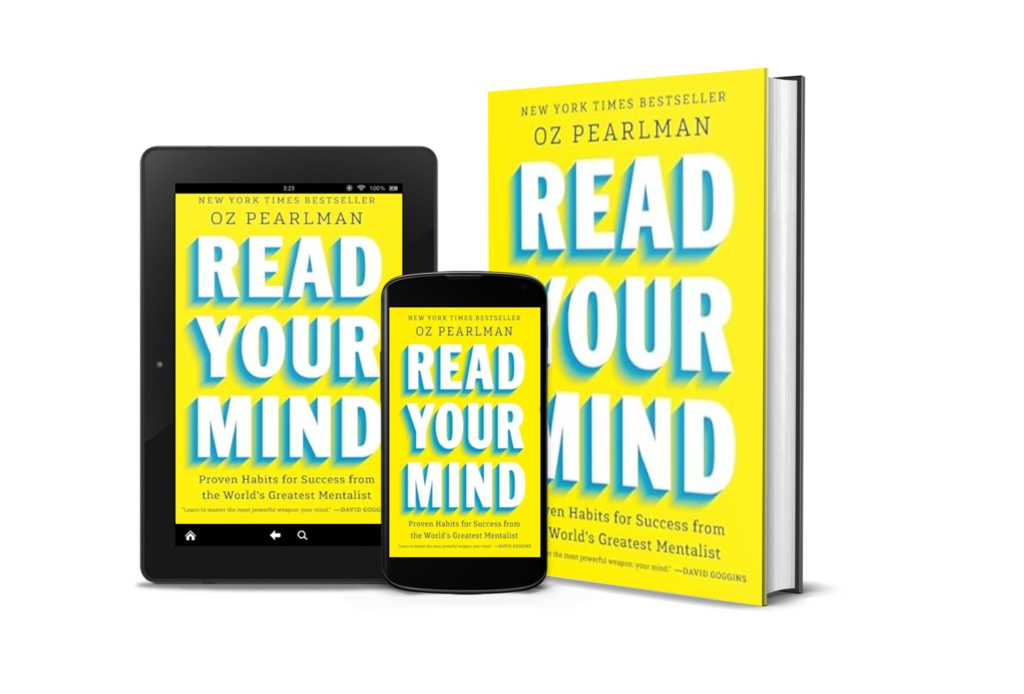
The “Read Your Mind” 10 Key Lessons, Summary, And Main Idea,And story
About The Author Oz Pearlman, Key Takeaways, video, Pros and Cons and FAQs
4.2 ⭐⭐⭐⭐ out of 5 stars (224)
👉 See why 224+ readers love this book
“Read Your Mind: Proven Habits for Success from the World’s Greatest Mentalist”
Disclaimer: “future Business Leaders! We may earn a small commission if you buy the Best Business Books through our links. The price remains exactly the same for you, guaranteeing honest recommendations.”
Introduction
Have you ever felt completely overwhelmed by constant worrying, negative self-talk, or thoughts you just can’t seem to turn off? Our minds are powerful tools, but they can also be our worst enemies. Read Your Mind is a practical guide to mastering your internal world.
This book dives deep into cognitive behavioral science, teaching you techniques to identify thought patterns, challenge limiting beliefs, and cultivate emotional resilience. It argues that true freedom comes not from controlling the world around you, but from controlling your reaction to it.
IIn this comprehensive Read Your Mind Summary, you will discover the following:
- The Core Principle: How to identify the difference between useful thought and destructive rumination.
- Emotional Resilience: Practical exercises for building inner strength against external pressures. (For mastering the bigger mindset shifts, read our review of The Let Them Theory Book ).
- 10 Key Lessons: Simple, daily techniques to improve focus and mental clarity.
- Cognitive Restructuring: How to replace destructive beliefs with empowering ones.
- Habitual Thinking: The link between your daily habits and your mental state. (To create powerful systems for building better mental habits, check out Atomic Habits Book ).
- Pros and Cons: An honest look at the commitment required for deep mental change.
- FAQs: Clear answers on applying these principles to stress and anxiety.
Start seeing your mind not as a master, but as a tool you can train and command.o becoming more aware and effective in everything you do.
For a Related Deep Dive (Extended Analysis):
If you are interested in applying these mental principles to “financial decisions” and “business strategy,” find a different, extended analysis of this highly related book on our partner site:
The “Read Your Mind” 10 Key Lessons, summary, Main Idea, And story
About The Author Oz Pearlman, Key Takeaways, video, Pros and Cons, and FAQs
🎯 Main Idea and Summary: The Mentalist’s Mindset for Success
Main Idea
The central idea of “Read Your Mind” is that the seemingly supernatural skills of a mentalist—heightened observation, deep connection, and powerful influence—are not innate gifts but learnable habits. Oz Pearlman argues that these same techniques can be applied to business and personal life to build stronger relationships, close more deals, lead more effectively, and achieve extraordinary success.
Summary
The book demystifies the art of mentalism, translating it into a practical system for personal and professional development. Pearlman breaks down his methods into actionable steps, teaching readers how to sharpen their observation to notice what others miss, use memory techniques to make people feel valued, master the art of strategic communication to build instant rapport, and ethically influence outcomes. It’s not about magic tricks; it’s about leveraging human psychology and focused attention to gain a significant advantage in any interaction.
Related: 1929 Wall Street Crash: 5 Investing Lessons to Protect Your Money
📜 Engaging Story (Narrative for Blog/Video)
Read Your Mind: She Had Perfect Numbers But LOST the Deal
Two salespeople, Anna and Ben, were pitching the same product to a tough client.
Anna did everything by the book.She had a flawless pitch, knew her product inside and out, and presented every feature with mathematical precision. However, she was logical, direct, and focused entirely on closing the deal.
She never noticed the client glancing at his watch or leaning back in his chair. She also missed the family photo prominently displayed on his desk.
Ben, however, started differently. Before even opening his laptop, he noticed the client’s marathon medal on the shelf. “I see you’re a runner,” he said. “What’s your favorite race?” A five-minute conversation about perseverance and goals followed. Ben subtly mirrored the client’s calm posture and steady tone. During his pitch, he framed his product’s benefits not just in terms of profit, but in terms of “reducing daily friction” and “long-term endurance,” echoing the runner’s mindset.
When it came time for the client to choose, he went with Ben. Anna was shocked. “My numbers were better!” she said. Ben hadn’t just sold a product; he had connected with a person. He didn’t read the client’s mind—he read the room. Anna had the data; Ben had the psychology. Ben won not by being a better salesman, but by being a better observer of people.
See the same video story of This Book Here:
https://youtu.be/0M9KKaR4JnE
👨💻 About The Author: Oz Pearlman
Oz Pearlman is a world-renowned mentalist, magician, and endurance athlete, uniquely positioning him to write on peak performance.
- Background: A former Wall Street analyst who turned his passion for mentalism into a globally recognized career, performing for Fortune 500 companies and on shows like “America’s Got Talent.”
- Expertise: He is a master of understanding human behavior, non-verbal communication, and the psychology of perception.
- Proven Performer: His success on stage and in corporate settings proves that his methods work in high-stakes, real-world environments.
- Goal: His mission is to share the practical, habit-forming techniques from his art to help others achieve greater success, confidence, and connection in their own lives.
Related: The “Buy, Rehab, Rent, Refinance, Repeat” 10 Key Lessons, Summary, and Main Idea
🔑 10 Key Lessons/Habits from “Read Your Mind.”
The 10 key lessons distill the mentalist’s toolkit into habits that anyone can cultivate for business and life.
| Phase | Key Lesson | Action/Focus |
| Observation | 1. Master the Art of Noticing | Go beyond passive looking. Actively scan your environment for micro-expressions, clothing details, and behavioral tics that reveal a person’s state of mind or personality. |
| 2. Listen with Intent, Not to Respond | Focus entirely on what the other person is saying (and not saying). Avoid formulating your response while they are talking to catch subtle nuances and underlying messages. | |
| Connection | 3. Build Instant Rapport with Mirroring | Subtly match the other person’s body language, speech patterns, and energy level to create a subconscious sense of familiarity and trust. |
| 4. Remember the “Small Stuff” | Use memory techniques (like association) to remember names, personal details, and past conversations, making people feel genuinely important and seen. | |
| Communication | 5. Ask Strategic, Open-Ended Questions | Frame questions that cannot be answered with “yes” or “no” to guide conversations, uncover true needs, and make the other person do most of the talking. |
| 6. Master the Power of the Pause | Use strategic silence after a question or statement to create anticipation, emphasize a point, and compel the other person to fill the void, often revealing more information. | |
| Influence | 7. Use “Misdirection” to Guide Focus | In business, this means strategically directing a client’s or colleague’s attention toward your strengths and away from potential weaknesses or objections. |
| 8. Create a Perception of Value | Frame your ideas and offerings in a way that highlights their unique value and makes them feel indispensable, much like a mentalist frames a prediction. | |
| Mindset | 9. Develop Unshakable Confidence | Cultivate a confident presence through preparation, posture, and positive self-talk. People are naturally drawn to and influenced by confident individuals. |
| 10. Practice Relentlessly | These skills are not theoretical. They require daily, conscious practice in low-stakes environments to become seamless, effective habits in high-stakes situations. |
💡 Key Takeaways from the Book
- Success is a Habit, Not a Trick: The abilities that lead to influence and connection are built through consistent, daily practice, not innate talent.
- People Reveal Everything: With trained observation, you can gather immense amounts of data from a person’s appearance, demeanor, and word choices, giving you a significant informational advantage.
- The Goal is Connection, Not Deception: These techniques are most powerful when used ethically to build genuine trust and rapport, not to manipulate.
- Your Memory is a Competitive Edge: In a world of distractions, the simple act of remembering a person’s name and key details about them can set you miles apart from the competition.
✅ Pros and ❌ Cons of the “Mentalist’s Mindset.”
| Feature | ✅ Pros (Advantages) | ❌ Cons (Disadvantages) |
| Skills | Practical & Transferable: The skills directly improve sales, negotiation, leadership, and networking. | Requires Practice: These are not “quick hacks.” They demand conscious effort and practice to master. |
| Approach | Ethical Framework: The book emphasizes using these powers for positive connection and influence. | Can Feel Inauthentic: If practiced poorly, techniques like mirroring can be detected and feel manipulative. |
| Mindset | Increases Confidence: Learning to “read” people and situations reduces social anxiety and builds self-assurance. | Initial Overwhelm: Trying to observe, listen, and mirror all at once can be mentally taxing for a beginner. |
| Application | Universal Application: The lessons are valuable for anyone, from CEOs to salespeople to parents. | Not a Magic Bullet: These are soft skills that enhance, but do not replace, core business competencies and hard work. |
💡 The 5 Pillars of Mentalism (And How to Apply Them)
| Pillar | What It Is | Key Lesson/Real-World Application |
| P1: Cold Reading & Warm Reading | The art of making high-probability guesses based on demographics, fashion, body language, and other visible clues. | Start General, Get Specific. People will subconsciously fill in the details. Use open-ended statements like “You’ve been thinking a lot about a future change lately,” which are almost always true, to build rapport and gather more information. |
| P2: The Power of Observation | Actively noticing the tiny, often-ignored details: a worn wedding ring, a specific phone model, scuff marks on shoes, nervous ticks. | Details Tell the Story. The way someone dresses, carries their body, or interacts with their phone reveals their priorities, personality, and current emotional state. Train yourself to notice 3 new things about everyone you meet. |
| P3: Misdirection & Framing | Guiding someone’s attention to one thing so you can do another, or framing a question in a way that influences their answer. | Control the Focus, Control the Narrative. In a negotiation, frame the conversation around value, not price. In a presentation, direct attention to your strongest point to minimize scrutiny on weaker areas. |
| P4: Building Rapid Rapport | Quickly creating a feeling of trust and connection through mirroring body language, matching speech patterns, and finding common ground. | Likeability is a Tool. People are more open and revealing with those they like and trust. Subtly mirror their posture and energy to subconsciously signal that you are on the same team. |
| P5: The Illusion of Choice | Presenting someone with multiple options, all of which lead to an outcome you have already predetermined. | Give the Feeling of Control. Instead of asking “Should we do this?” ask “Would you prefer we do this on Tuesday or Thursday?” This grants autonomy while ensuring the action is taken. |
⚠️ A Crucial Takeaway: The Master Key
While these 5 pillars are powerful individually, their true strength lies in their seamless combination. The master mentalist doesn’t just Cold Read; they Cold Read while establishing Rapid Rapport and controlling the Frame. The integration of these tools is the master key to profound human connection and influence. But what about the ethics of this power?
“If this post has given you a new perspective, imagine the impact the entire book could have on your interactions. Get your copy now.”
❓ Frequently Asked Questions (FAQs)
Do I need to be a performer to use these techniques?
Absolutely not. The book is written for a business and general audience. The techniques are framed as habits for improving communication, memory, and influence in everyday life.
Is this about manipulation?
Oz Pearlman strongly advocates for an ethical approach. The goal is to build genuine rapport and trust, not to deceive or coerce. It’s about understanding people better to create win-win outcomes.
What is the most important habit for a beginner to start with?
The book suggests starting with active listening and the conscious effort to remember names. These two habits alone can dramatically improve your personal and professional relationships.
How is this different from a standard body language book?
While body language is a component, “Read Your Mind” provides a more holistic system that includes memory, questioning tactics, strategic framing (misdirection), and the mindset of a performer, making it a more comprehensive toolkit for influence.
People also ask
Is this about predicting the future?
A: No. It’s about understanding the present with such clarity that you can make highly accurate predictions about probable outcomes. A meteorologist doesn’t control the weather; they observe patterns to forecast it. Similarly, a mentalist doesn’t read minds; they read people to anticipate behavior, build deep trust, and navigate the world with unparalleled insight.
How does Oz Pearlman read people’s minds?
Oz Pearlman does not literally read minds. His techniques, detailed in his book “Read Your Mind,” are based on applied psychology, sophisticated observation, and the art of cold reading. He masters the skill of noticing and interpreting micro-expressions, body language, subtle verbal cues, and baseline behaviors. By making high-probability guesses based on a person’s appearance, demographics, and reactions, and then using open-ended statements that people subconsciously personalize, he creates a powerful and convincing illusion of mind-reading. His success lies in his trained ability to see what most people overlook.
Which book is best for mind-reading?
For anyone interested in the practical psychology behind “mind-reading,” “Read Your Mind: Proven Habits for Success from the World’s Greatest Mentalist” by Oz Pearlman is an excellent choice. Unlike books focused on pure magic tricks, Pearlman’s book frames these skills as habits for personal and professional success, making it highly applicable for sales, leadership, and communication. Another classic in the field is “What Every BODY is Saying” by Joe Navarro, a former FBI agent, which provides a masterclass in reading body language. For the mentalism performance aspect, “13 Steps to Mentalism” by Tony Corinda is considered the foundational text, though it is more technical.
Who is the author of Power of the Mind?
The phrase “Power of the Mind” is a common title theme. If you are referring to a book closely related to the themes in Oz Pearlman’s work, you might be thinking of “The Power of Your Subconscious Mind” by Joseph Murphy, a classic self-help book that explores manifesting desires through mental focus. However, the direct author of the book “Read Your Mind” is Oz Pearlman, a renowned mentalist, magician, and keynote speaker who has distilled his years of stage performance and corporate speaking into this practical guide.
Final Verdict
‘Read Your Mind’ is a fascinating and practical guide to upgrading your human interaction skills. Pearlman successfully translates the allure of mentalism into a credible and powerful business strategy. If you want to stand out in a crowded market, lead with more charisma, and build unbreakable client rapport, this book provides the unique toolkit.
Buy if you’re ready to move beyond traditional business books and develop a tangible, competitive edge through human connection.
Rating: 4.2/5 stars— A unique and engaging masterclass in the art of perception and influence.
Tags:
- Oz Pearlman mentalism
- Business influence strategies
- Communication skills 2025
- Build rapport techniques
- Memory improvement for professionals
- Observation skills training
- Sales psychology
- Leadership charisma
- Ethical persuasion
- Success Habits Book