
Disclaimer: Our site may earn a small commission on products purchased through our links. Your price remains unchanged—this guarantees our honest recommendations.
4.4 ⭐⭐⭐⭐⭐ out of 5 stars (269)
👉 Stop Missing Out: Become the Next Success Story—Order Your Book!
The “Wisdom Takes Work” 10 Key Lessons, Summary, Main Idea, and Story, About the Author: Ryan Holiday, Key Takeaways, Video, Pros and Cons, and FAQs
Introduction:
The Missing Manual Between Knowing and Doing
We all have those books on our shelves—the philosophies, the life principles, the self-help classics we nod along with and intellectually know work. We highlight the passages, share the quotes, and agree with the logic. Yet, Monday morning arrives, and we find ourselves stuck in the same reactive patterns, making the same old mistakes, wondering why the transformation we read about feels perpetually out of reach.
Why does this happen? Because there exists a vast, unaddressed chasm between knowledge and action—a gap that most books elegantly describe but fail to provide a practical bridge to cross. We’re given the destination, but not the step-by-step map for the rugged terrain of daily life.
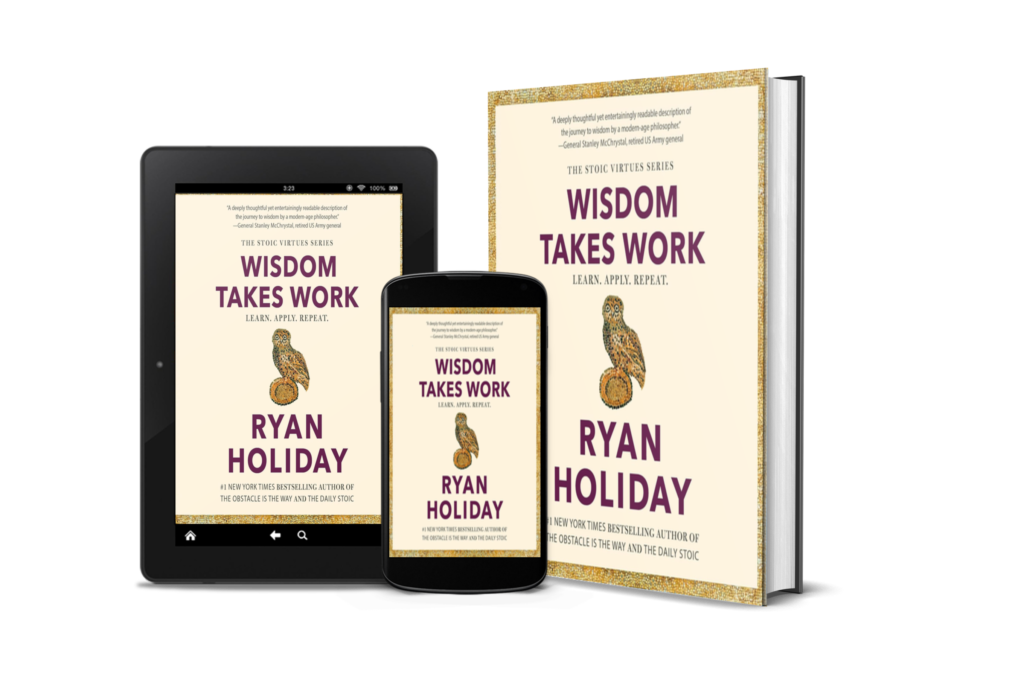
Ryan Holiday’s “Wisdom Takes Work: Learn. Apply. Repeat.” is that essential, missing manual. This is not another book promising new, secret theories. It is a practical workshop delivered in audio form—a direct, no-excuses handbook dedicated entirely to the hardest part of growth: the gritty, unglamorous work of turning what you understand in your head into how you consistently live and act.
If you’re intellectually full but practically unchanged, tired of collecting insights like museum pieces and finally ready to use them as the active currency for real-world change, then you are in precisely the right place. The theory is over. Let’s get to work.
Here’s your detailed preview of what this complete guide will unpack:
The Main Idea: We’ll explore the book’s core argument: that wisdom is not a treasure to be found, but a muscle to be built. It is not a passive state of enlightenment you stumble upon, but the active result of daily, disciplined practice. True wisdom is a verb, and this book provides the training regimen.
A Detailed Summary: You’ll get a clear walkthrough of how this unique audiobook functions less as a narrative and more as a personal coaching session. We’ll break down how Holiday transforms ancient Stoic principles from abstract philosophy into a modern-day personal operating system, complete with daily rituals, weekly reviews, and a relentless focus on implementation over consumption.
The Real Story: This is about diagnosing and closing the “implementation gap”—the silent killer of personal progress that leaves most people feeling stuck and frustrated despite their knowledge. (For the foundational behavioral science and systems that make this daily practice sustainable and automatic, the principles in Atomic Habits provide the perfect, science-backed companion to this philosophy.)
Lessons for Today – The Practical Shift: This section moves us from theory to tactics. We’ll detail the mental and practical shift required to move from being a passive consumer of information to an active applier of principles—the exact point where theoretical understanding becomes tangible transformation.
Key Takeaways for Immediate Use: No waiting required. We’ll distill the most actionable insights so you can begin building your “wisdom muscle” from day one, with simple, concrete steps you can implement immediately.
The Good & The Bad – No Fluff: An honest, clear-eyed appraisal. We’ll examine why this focused, audio-driven format is a game-changer for action-oriented individuals, and why it might be frustrating or unsuitable for those seeking another theoretical deep-dive. (For those looking to apply this disciplined, principle-driven mindset to leading teams and organizations, the doctrine of Extreme Ownership offers powerful and parallel frameworks for accountability and execution at scale.)
5 Pillars of the Wisdom Cycle: We’ll outline the simple, repeatable framework at the heart of the book—the cyclical engine of Learn, Apply, Reflect, Adjust, and Repeat—that structures continuous growth and prevents stagnation.
Straight Answers to Your Real Questions:
Related: The Ultimate Sales Machine
Main Idea and Summary
The Main Idea
The central, actionable idea is that wisdom is earned through a deliberate cycle of learning, applying, reflecting, and repeating. It is not an intellectual understanding but a habituated way of being. Most people fail at self-improvement because they stop at consumption (“Learn”). This book provides the system, tools, and mindset to force the crucial next steps: “Apply” and “Repeat,” turning fleeting insights into permanent character traits.
Summary
“Wisdom Takes Work” is more of a guided practice than a narrative book. Structured as an audiobook, it functions as a masterclass in applied philosophy. Holiday distills the core practices from Stoicism and other wisdom traditions into daily and weekly disciplines. It focuses on the mechanics of transformation: how to journal effectively, how to conduct meaningful evening reviews, how to set virtue-based intentions, and how to learn from failures. The emphasis is relentlessly on doing—providing prompts, exercises, and a clear structure to instill wisdom through consistent action.
About the Author: Ryan Holiday
Ryan Holiday is one of the foremost modern popularizers of Stoic philosophy, and the author of bestselling books like The Obstacle Is the Way, Ego Is the Enemy, and The Daily Stoic. His unique background—a former marketing director for American Apparel turned author and media strategist—gives him a pragmatic, non-academic approach to ancient wisdom. He is known for extracting timeless principles and making them immediately applicable to modern life, business, and leadership. His authority comes from being a practitioner first and an author second, building a media empire (The Daily Stoic) around the very practices he teaches.
🔑 The 10 Key Lessons from “Wisdom Takes Work.”
| Practice: Goals are about the future you can’t control. Systems (daily practices) are about what you can present. Focus on maintaining the system of wisdom-building habits. Application: Forget “Become wise.” Focus on “Did I do my journal and review today?” The former is an outcome; the latter is a process. | Key Lesson | The Core Practice & Application |
|---|---|---|
| 1 | The Journal is Your Gym | Practice: Wisdom is built by writing, not just reading. Daily journaling is non-negotiable for processing, planning, and reviewing. Application: Don’t just buy a nice notebook. Use it every morning for intention and every evening for reflection with specific prompts. |
| 2 | The Evening Review: Your Daily Debrief | Practice: The most important few minutes of your day. Ask: What did I do well? Where did I let myself down? What did I learn? Application: Make this a ritual. Be brutally honest. This is where you catch your mistakes and reinforce your successes. |
| 3 | Virtue as a Metric, Not Outcomes | Practice: Judge your days not by what you achieved, but by how you acted. Did I act with courage, justice, temperance, and wisdom? Application: When assessing a tough day, ask not “Did I win?” but “Was I brave? Was I fair?” This puts control back in your hands. |
| 4 | Premeditatio Malorum (Premeditation of Evils) | Practice: Mentally rehearse potential setbacks and losses. This isn’t pessimism; it’s inoculation against fear and preparation for resilience. Application: Spend 5 minutes each morning visualizing a potential challenge and your calm, virtuous response to it. |
| 5 | The Power of Constraints | Practice: Impose voluntary hardship (a cold shower, a fast, a digital sabbath). This trains your “discomfort muscle” and proves your freedom from external conditions. Application: Choose one small voluntary constraint each week to maintain discipline and appreciation. |
| 6 | Read to Apply, Not to Accumulate | Practice: Reading should be an active hunt for one or two actionable ideas, not a passive consumption of many. Application: When you read a profound line, stop. Write it down. Then write: “How can I use this today?” |
| 7 | Find a Teacher in the Past | Practice: You don’t need a live guru. Adopt a historical figure (Marcus Aurelius, Seneca) as your mentor. Read their work repeatedly and ask, “What would they do?” Application: Choose one wisdom text (like Meditations) and read a page daily, treating it as direct counsel. |
| 8 | Conversion of Obstacles into Fuel | Practice: The “Obstacle is the Way” is not just a phrase; it’s a cognitive ritual. Immediately reframe every problem as practice or an opportunity in disguise. Application: When hit with bad news, your first internal response must be: “Good. How can this make me better?” |
| 9 | System Over Goals | Practice: Goals are about the future you can’t control. Systems (daily practices) are about the present you can. Focus on maintaining the system of wisdom-building habits. Application: Forget “Become wise.” Focus on “Did I do my journal and review today?” The former is an outcome; the latter is a process. |
| 10 | Wisdom is Shared | Practice: Teaching and discussing what you learn forces clarity and cements understanding. It also allows you to benefit from others’ perspectives. Application: Join or form a reading group. Explain concepts you’re learning to a friend. Write about your applications. |
💡 The 5 Pillars of the Wisdom Cycle (Learn. Apply. Repeat.)
| Pillar | What It Is | The Supporting Ritual |
|---|---|---|
| P1: Curated Learning (LEARN) | Actively seeking out timeless principles from philosophy, history, and science—not random information. | The Morning Read & Note: Start the day with a purposeful reading from a core text and extract one actionable idea. |
| P2: Intentional Application (APPLY) | Deliberately using the learned principle to navigate real-life situations as they occur. | The Mental Cue: Carry the day’s principle as a mantra. When a relevant situation arises, pause and apply the principle before reacting. |
| P3: Rigorous Reflection (REFLECT) | The non-judgmental analysis of your attempts at application. What worked? What didn’t? Why? | The Evening Review: The daily journaling session dedicated solely to assessing your actions against your stated virtues and intentions. |
| P4: Iterative Adjustment (ADJUST) | Using the reflection to refine your understanding and plan a better application for the future. | The Weekly Tuning: A longer weekly session to review patterns, adjust your practices, and set intentions for the coming week. |
| P5: Consistent Repetition (REPEAT) | The understanding that one application means nothing. Wisdom is the residue of hundreds of repetitions. | The Non-Negotiable Habit Stack: Embedding these practices (reading, journaling, review) into the immutable core of your daily routine, rain or shine. |
📌 Key Takeaways from the Book
- Wisdom is Work Ethic: It’s the daily labor of applying good principles, not the passive state of having read them.
- The Gap is in the Application: Everyone has access to great ideas. Almost no one does the hard work of consistently living them. Your edge lies in the application.
- The Tools are Simple but demanding: a Journal, a pen, a few good books, and the willingness to be honest with yourself. The simplicity of the tools belies the difficulty of using them every day.
- You Are Your Own Most Important Project: Investing time in this practice is the highest-leverage activity you can do. It improves every other area of your life by improving the person navigating them.
- Start Now, Start Small: Don’t wait for the perfect time. Don’t try to overhaul your life tonight. Read one page. Write three sentences in a journal. Apply one principle to one small frustration today.
✅ Pros and ❌ Cons
| Aspect | ✅ Pros (Advantages) | ❌ Cons (Considerations) |
|---|---|---|
| Format & Practicality | Extremely Action-Oriented. It bypasses theory and goes straight to “do this.” The audiobook format feels like a personal coaching session. | Not a Standalone “Book.” It is a manual for practitioners. If you haven’t read Holiday’s other works or basic Stoic texts, you may lack the foundational “what” to apply. |
| Author’s Delivery | Holiday is a Compelling Narrator. His calm, assured, and direct narration adds weight and clarity to the practices. It’s easy to listen and follow along. | Repetitive for Existing Fans. If you’ve read The Daily Stoic and other works, much of the underlying philosophy will be familiar. The value is in the structured practice system. |
| Mindset Shift | Turns Philosophy into Practice. It effectively bridges the gap between ancient wisdom and modern daily life, making esoteric concepts feel immediately useful. | Requires High Self-Discipline. The book tells you what to do, but you alone must supply the consistency. It can be demoralizing if you fail to keep up the rituals. |
| System Design | Provides a Clear, Repeatable System. The “Learn. Apply. Repeat.” cycle and the specific rituals (evening review, premeditation) give you a complete personal operating system. | Can Feel Rigid. The prescribed structure may not suit everyone’s learning or reflective style. Some may benefit from a more flexible approach. |
| Target Audience | Perfect for the “Stuck” Self-Help Reader. Ideal for someone who has consumed a lot of content but hasn’t seen tangible life change. | Too Basic for Advanced Practitioners. Those already engaged in deep philosophical practice or therapy may find it introductory. |
❓ Frequently Asked Questions (FAQs)
1. Do I need to have read Stoic philosophy or Ryan’s other books first?
It is highly recommended, but not strictly required. The audiobook explains the core concepts, but its power is multiplied if you’re applying principles from Meditations, The Daily Stoic, or The Obstacle Is the Way. Consider this the “workbook” to those “textbooks.”
2. Is the audiobook format essential?
The audiobook is the ideal format for this content. Hearing Holiday deliver the instructions and explanations adds a layer of coaching and emphasis that a physical book might lack. It’s designed to be listened to actively, possibly with a journal in hand.
3. How long do these practices take each day?
The core practices (Morning Read + Evening Review) can be done in 15-20 minutes total. The key is consistency, not duration. It’s about showing up every day, not doing a marathon session once a week.
4. What if I fail to do my journal or review for a few days?
This is part of the work. The practice includes restarting. The “Repeat” in the title acknowledges you will fall off. Wisdom is in the return, not in perfection. Holiday would likely say: Don’t guilt-trip yourself. Just do your review today.
5. How is this different from therapy?
Therapy often focuses on healing past wounds and understanding the psyche. “Wisdom Takes Work” is about proactive character building and installing a philosophical operating system. They are complementary. Therapy heals the foundation; this practice builds the structure on top of it.
6. Can I use this system with other philosophies (Buddhism, Christianity, etc.)?
Absolutely. The cycle of “Learn. Apply. Reflect. Repeat.” is universal. While the examples are Stoic, you can easily slot the principles from any wisdom tradition into this framework. The system is about the how; the tradition provides the what.
👉 “Do you want this idea to not just remain a ‘post’ but to become your ‘reality’? Start the journey here.”
Final Verdict
“Wisdom Takes Work: Learn. Apply. Repeat.” is a 4.4-star masterclass in implementation. It is the missing link for anyone who feels intellectually full but practically unchanged. Ryan Holiday has successfully packaged the arduous, personal journey of wisdom into an accessible, actionable system.
Buy it if: You are a fan of Ryan Holiday or Stoicism and want a structured practice, or if you’ve read a lot of self-help but struggle to make the lessons stick. You’re ready to commit 15 minutes a day to disciplined self-reflection.
Skip it if: You are looking for a new philosophical theory, a narrative-driven book, or are not prepared to do the daily journaling and reflection work. This is for doers, not just consumers.
Rating: 4.4/5 Stars — An essential, practical guide that provides the engine to turn the fuel of knowledge into the motion of a wiser life. The title doesn’t lie—it takes work, and this is your trainer.
WisdomTakesWork #PersonalGrowth #Philosophy #Mindset #SelfDiscipline #DeepThinking